

In a world increasingly conscious of sustainability and ethical production, OEKO-TEX® has emerged as a benchmark for quality assurance in the textile and leather industry. For over three decades, we have provided scientific, transparent, and rigorous certification processes to ensure products are safe for both consumers and the environment. Today, we offer distinct standards, each addressing different aspects of sustainability, safety and production integrity along the global supply chain.Dr. A. Beerli. CEO. OEKO-TEX®.

The OEKO-TEX® modular system
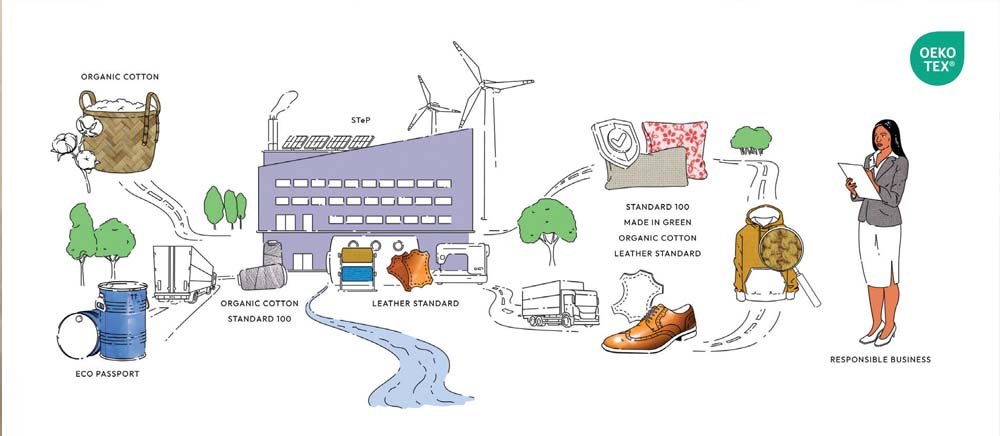
STANDARD 100 is the most widely recognized certification, ensuring textiles are tested for harmful substances. LEATHER STANDARD applies the same rigorous testing criteria to leather goods. ECO PASSPORT certifies the safety of chemicals used in production. STeP stands for Sustainable Textile and Leather Production and evaluates factories based on six sustainability-focused modules, driving responsible production processes. MADE IN GREEN combines several OEKO-TEX® standards, providing traceability and consumer assurance of ecological and social production. RESPONSIBLE BUSINESS is a management process certification to meet supply chain due diligence. The latest addition, ORGANIC COTTON, was introduced to address the growing need for transparency and traceability in organic cotton textiles.`
GMO-tested and fully traceable cotton
With the rising demand for organic cotton, ensuring sustainability and traceability throughout the supply chain has become more complex. OEKO-TEX® ORGANIC COTTON is designed to verify organic cotton at every stage, from farm to finished product. The certification plays a crucial role in preventing fraud and contamination, offering a reliable solution for brands and consumers alike.
One of the core pillars of the ORGANIC COTTON certification is comprehensive GMO testing. This certifies that the cotton used is processed without the intentional use of genetically modified organisms (GMOs), preserving its integrity. By the innovative distinguishing between accidental contamination and deliberate mixing with conventional cotton, the certification upholds strict industry standards. GMO testing is not only essential for compliance but also supports biodiversity, soil health and regenerative agricultural practices, contributing to a more sustainable industry.
The certification was introduced in 2023 and saw the first finished products on the market in January 2024. Within the first year, the limit value for GMOs was reduced from 10% to 5%, a significant tightening of the requirements for purity and quality.
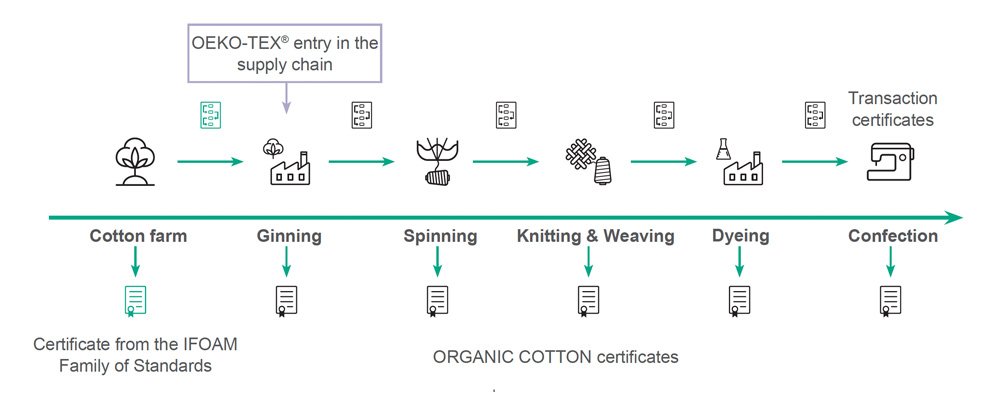
OEKO-TEX® ORGANIC COTTON follows a meticulous verification process, beginning with farm-level certification through the IFOAM family of standards. From there, the cotton undergoes rigorous testing and documentation through transaction certificates that track its movement along the supply chain. Every stage, including ginning, spinning, knitting, weaving, dyeing, and confection, is carefully monitored to maintain the integrity of the organic fibre.
Ensuring quality and compliance
OEKO-TEX® ORGANIC COTTON certification is designed to provide full coverage and traceability, ensuring that organic textiles meet international regulations such as REACH Annex XIV & XVII and US CPSIA (lead). Every product bearing the OEKO-TEX® ORGANIC COTTON label has been tested not only for GMOs but also for harmful substances, including pesticides, banned azo colorants and per- and polyfluoroalkyl substances (PFAS).
To further strengthen its reliability, OEKO-TEX® employs a centralized database for transaction tracking, preventing fraud and enhancing transparency across the supply chain. Mass balancing is also implemented to ensure that the volume of certified organic cotton matches the quantity of finished products, preventing misrepresentation.
OEKO-TEX® ORGANIC COTTON aligns with international regulatory requirements, covering all relevant substances listed under the European Chemicals Agency (ECHA) SVHC candidate list. With a network of over 35,000 certified companies worldwide, OEKO-TEX® facilitates the sourcing of materials and partnerships, making it easier for businesses to navigate the complex landscape of organic textile production.
Setting industry standards
For more than 30 years, OEKO-TEX® has continually evolved its portfolio to adapt to market changes while maintaining an unwavering commitment to quality. Through stringent testing and scientific methodologies, the organisation has set industry benchmarks for environmental and social responsibility and product safety. The introduction of OEKO-TEX® ORGANIC COTTON was a direct response to the lack of transparency in the organic cotton market, ensuring that consumers and brands alike can trust their purchases.

Innovation plays a central role in OEKO-TEX®‘s ongoing efforts to refine its testing processes and certification standards. The organisation operates a network of independent institutes in Europe and Japan with offices in over 70 countries, facilitating knowledge exchange and staying at the forefront of industry developments. Through close collaboration with global stakeholders OEKO-TEX® ensures that its initiatives remain inclusive, relevant and aligned with sustainability goals.
The organisation also actively engages with manufacturers to enhance sustainable textile and leather production. While certifications like STANDARD 100, LEATHER STANDARD, ORGANIC COTTON, and ECO PASSPORT focus on individual products, STeP and RESPONSIBLE BUSINESS certification emphasize sustainable production and management practices. Through mandatory audits and third-party assessments, certified companies demonstrate their commitment to responsible manufacturing, fostering transparency and consumer trust.
To support companies in their sustainability journey, OEKO-TEX® offers additional tools, including the OEKO-TEX® Impact Calculator and the BHive chemical management app. These resources help businesses assess their environmental impact and optimise their chemical usage, further reinforcing the industry’s shift towards sustainable practices.
“OEKO-TEX® ORGANIC COTTON represents a commitment to transparency and environmental responsibility. By choosing this certification, brands not only meet regulatory requirements but also contribute to a more sustainable future. As the industry continues to evolve, OEKO-TEX® remains at the forefront, ensuring that organic cotton textiles uphold the highest standards of quality and sustainability.” Fanny Racine. Product Manager. ORGANIC COTTON.
Why manufacturers choose OEKO-TEX® ORGANIC COTTON
OEKO-TEX® ORGANIC COTTON provides unparalleled verification, testing that every certified product has been manufactured without the internal use of GMOs and is tested for pesticides and other harmful substances. This certification is instrumental in promoting sustainability, soil health, and biodiversity while offering consumers confidence in the authenticity of their purchases.
The certification process is thorough, starting at the farm level with IFOAM certification and extending through every stage of production. Each material transfer is documented with transaction certificates, ensuring full traceability. The quantitative GMO test differentiates between accidental contamination and intentional mixing with conventional cotton, further strengthening the certification’s credibility.
Products undergoing certification must comply with strict human ecology requirements, with more intensive testing for items that come into close contact with the skin. OEKO-TEX® employs globally standardised test criteria, ensuring uniformity and reliability. The certification is reviewed annually, with limit values for harmful substances updated and certain chemicals banned to align with the latest scientific findings and legal requirements.
In addition to ensuring compliance, OEKO-TEX® ORGANIC COTTON certification offers numerous practical benefits for businesses. The certification process facilitates entry into global markets, as many retailers and brands require OEKO-TEX® compliance as part of their restricted substances lists. The independent evaluation conducted by OEKO-TEX® institutes enhances product credibility, strengthening consumer confidence. Through its modular system, OEKO-TEX® allows businesses to streamline their certification efforts. If a product’s components have already been tested under ORGANIC COTTON or if OEKO-TEX® ECO PASSPORT certified chemicals are used, additional testing costs can be reduced. Furthermore, ORGANIC COTTON certification serves as a foundation for OEKO-TEX® MADE IN GREEN, which extends sustainability verification to the supply chain on production level.
Strengthening industry collaboration and consumer trust
For brands seeking certified partners the OEKO-TEX® Buying Guide provides an online directory of certified manufacturers and brands. This resource enables businesses to connect with trustworthy suppliers, fostering collaboration within the sustainable textile and leather industry.With a steadfast dedication to consumer safety, environmental stewardship, and continuous innovation, OEKO-TEX® is shaping the future of sustainable textiles and leather. One certified product at a time.

