

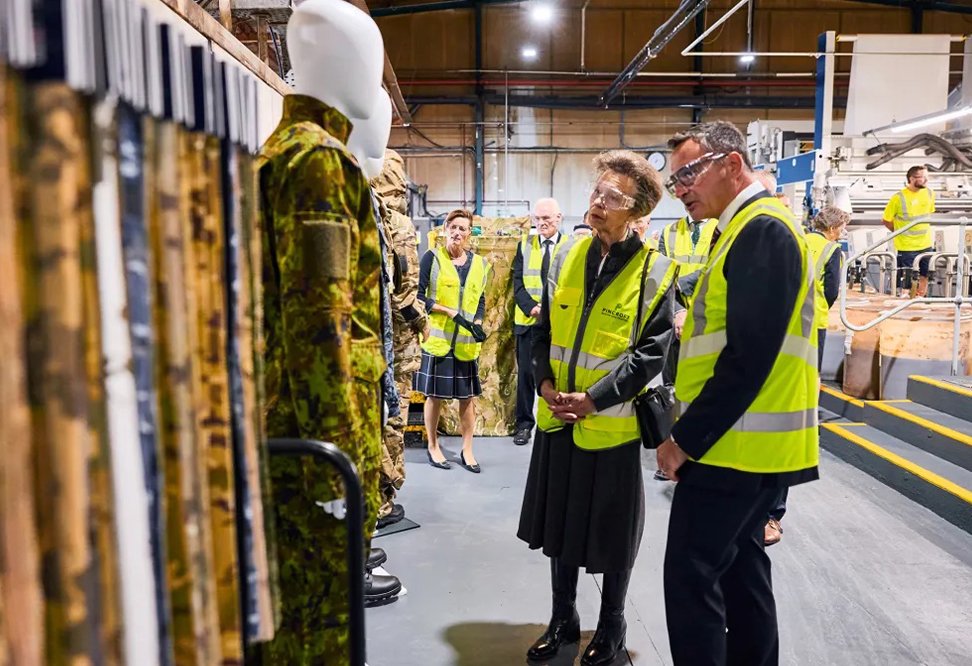
The collaboration positions two established UK technical-textile producers as domestic suppliers for printed woven fabrics used in military and defence applications.
Pincroft Dyeing & Printing and Toray Textiles Europe have formed a UK defence textiles collaboration aimed at supporting the Government’s push for a more resilient domestic supply chain. The partnership brings together Pincroft’s military printing, dyeing and flame-retardant finishing capabilities with Toray’s woven synthetic textile manufacturing base, creating a stronger UK offer for printed woven technical fabrics used by armed forces.
A domestic capability argument
Pincroft, based in Adlington in northwest England, operates one of Europe’s largest integrated textile processing, printing and finishing facilities. UKFT says the company exports to more than 80 countries and has annual production capacity above 50 million metres, with fabrics processed by Pincroft already used in military uniforms internationally.
The company has also continued to invest in defence textiles. In September 2025, Pincroft said it had showcased a £1.5 million investment in advanced camouflage printing technology during a visit by HRH The Princess Royal, including a new rotary printer and laser engraving equipment.
Toray adds synthetic-fabric scale
Toray Textiles Europe, based in Mansfield, manufactures woven polyester, nylon and other high-performance synthetic fabrics for automotive, printing, industrial, medical, apparel, coating and lamination applications. The company’s site includes yarn production, preparation, weaving, dyeing and finishing, giving it a vertically integrated platform for technical textile development.
UKFT said Toray has recently invested more than £15 million in advanced looms and process machinery, strengthening its ability to respond to future defence and industrial demand. The collaboration therefore links Toray’s upstream synthetic woven-fabric capability with Pincroft’s downstream printing and finishing expertise.
Procurement is the real test
UKFT chief executive Adam Mansell welcomed the move, arguing that UK procurement bodies should be incentivised, or required, to source more products from reliable domestic manufacturers and consider the wider industrial benefit. His point is commercially important: capability alone does not rebuild supply chains unless procurement policy rewards local resilience, technical assurance and long-term capacity.
For the UK textile sector, the partnership offers more than a defence story. It is a test of whether advanced domestic manufacturing can win strategic orders in sectors where quality, security of supply, traceability, and speed matter as much as price.
