

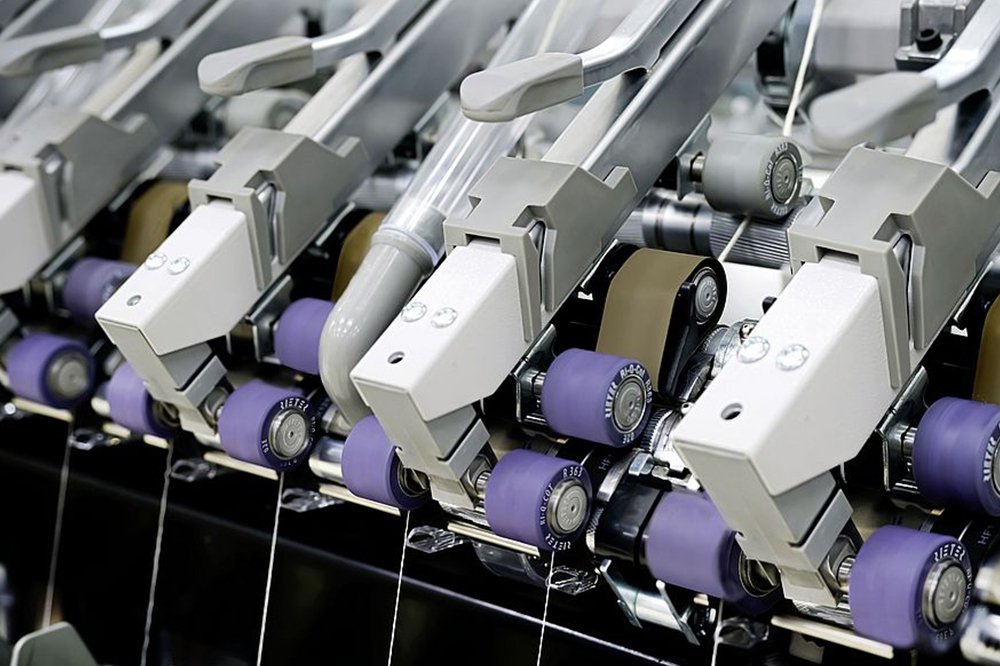
The company’s message is that the next competitive advantage in spinning will come from automation and intelligence as much as from machine speed.
At ITM 2026, Rieter will present a portfolio built around a clear industrial goal: the gradual creation of the fully automated spinning mill. That ambition is not new, but the company is now packaging it into a more concrete commercial offer, spanning bale transport, can handling, packaging automation and digital decision-support tools.
What is new
Several product launches underline the strategy. The OMEGAlap E 40 promises higher output with sharply lower energy and compressed-air use. COMPACT4 is positioned as a more flexible and low-maintenance compacting system. The rotor spinning machine R 70 is marketed around both higher productivity and lower energy use, while the card C 81 brings AI into fibre preparation through Carding Gap Control and Trash Level Monitor functions.
Why it matters
The significance lies less in individual machines than in the production logic behind them. Mills are under pressure to cut energy costs, work with more recycled and non-virgin materials, and maintain quality with fewer labour-intensive interventions. Rieter is trying to answer all three.
What comes next
The co-location with Barmag at ITM is also notable. By linking Rieter’s position in natural-fibre spinning with Barmag’s man-made fibre technologies, the group is moving towards a broader system-provider role. In a more demanding textile market, that integrated approach may matter as much as any single machine innovation.
