

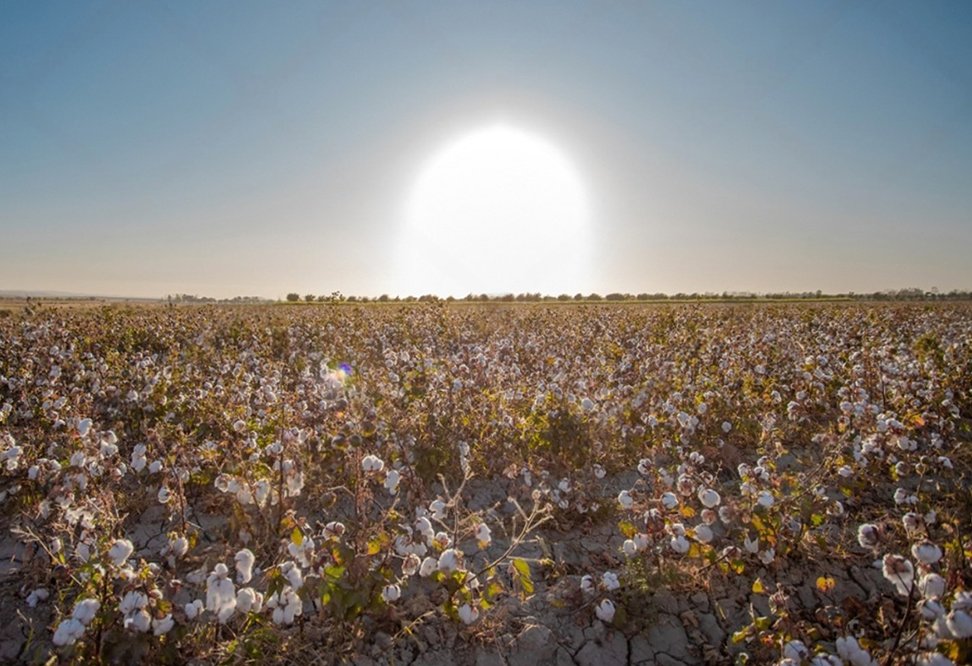
Punjab and Sindh cotton growers have been advised to protect flowering and boll-forming crops as extreme heat threatens yield, fibre development and farm returns.
Pakistan’s cotton belt is facing a fresh climate stress test as the Punjab Agriculture Department and the Central Cotton Research Institute Multan urged growers to take immediate steps to protect standing cotton from a severe heatwave. The advisory follows forecasts that temperatures in several areas of Punjab and Sindh could reach 46°C to 50°C, creating particular risk for early-sown cotton entering flowering, square formation and boll development stages.
A vulnerable stage for cotton
CCRI Multan Director Sabahat Hussain warned that even limited climatic stress during flowering and boll formation can materially reduce yield. These are decisive stages for plant retention, boll setting and eventual lint output. Heat stress at this point can increase flower and fruit shedding, weaken boll development and reduce the crop’s ability to convert field investment into harvestable cotton.
For Pakistan’s textile chain, the warning matters beyond the farm. Lower cotton productivity would tighten domestic fibre availability, increase pressure on ginners and spinners, and potentially add to reliance on imported cotton if the season deteriorates.
Moisture becomes the first defence
The central recommendation is to maintain soil moisture. Farmers have been advised to irrigate cotton after flowering at intervals of three to five days, preferably in the evening, night or early morning to reduce evaporation and plant stress. CCRI’s separate advisory also stressed cooler-hour irrigation and close monitoring during the heat spell.
Nutrient management is also part of the response. The Punjab Agriculture Department advised applying half a bag of urea or one bag of calcium ammonium nitrate with irrigation water. CCRI recommended 10–20 kg of SOP or MOP through irrigation for crops already in reproductive stages.
Balanced nutrition and foliar support
The advisory further recommended micronutrients, including boron, zinc and sulfur, to support boll setting and crop vigour. CCRI suggested a foliar spray per acre containing potassium sulfate, magnesium sulfate, zinc sulfate, copper sulfate and borax mixed in 100 litres of water, with repeat application after 15 days.
The next issue to watch is whether timely irrigation, potassium nutrition and field-level extension can prevent heat stress from translating into lower yields. For Pakistan’s cotton-textile economy, weather resilience is now an operational necessity, not a seasonal side note.
