

The move shifts a historic Swiss weaving technology into Itema’s Italian manufacturing base while preserving spare-parts continuity for existing customers.
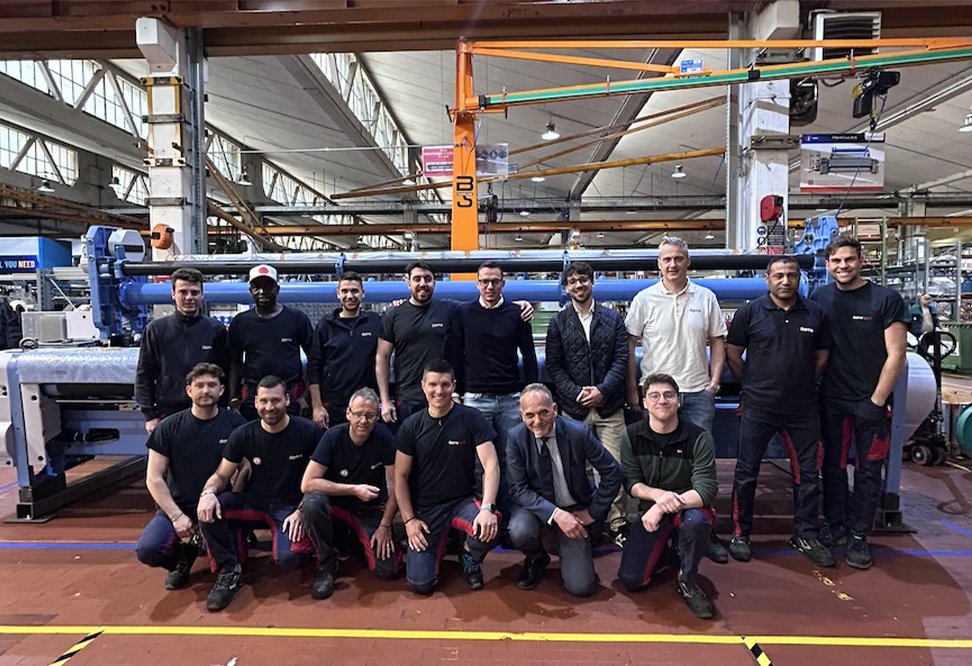
Itema has produced its first projectile weaving machines manufactured in Italy, marking a significant industrial transfer from its historic Zuchwil facility in Switzerland to the group’s headquarters in Colzate. The milestone, completed in early May 2026, brings a technology lineage dating back to 1953 into a new production phase inside Itema’s Italian manufacturing system.
The transfer covers not only machine assembly but also original spare-parts manufacturing for both current and previous projectile weaving machine models. For customers, that continuity is critical: projectile looms are often used in technically demanding applications where machine life, serviceability and parts availability directly affect production risk.
A Swiss technology enters an Italian phase
Projectile weaving began its modern industrial journey with the TW11 model, developed in Zuchwil more than seven decades ago. The technology became known for reliability, controlled weft insertion and suitability for demanding woven structures.
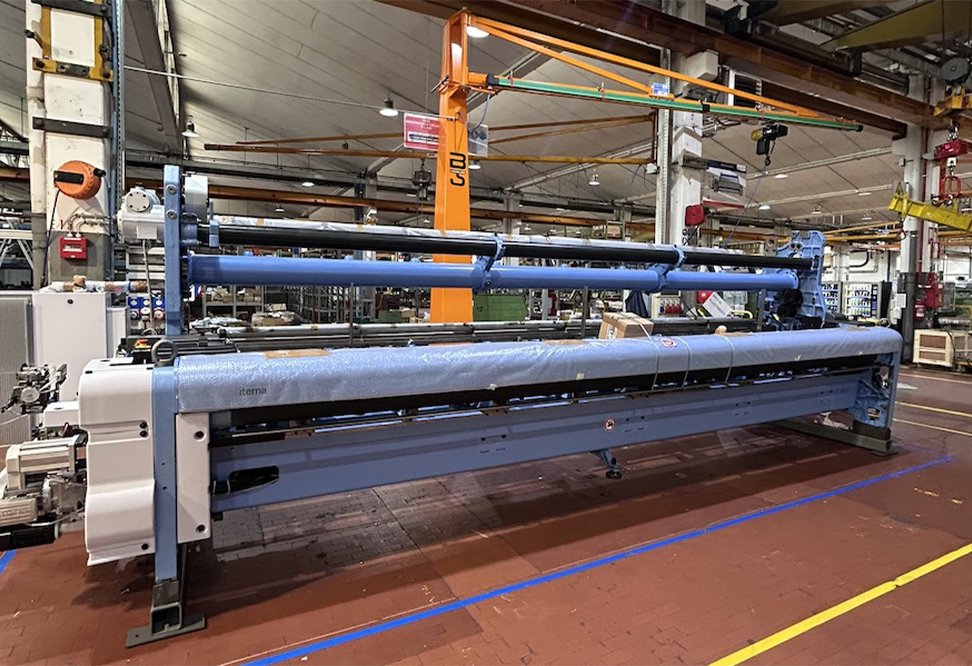
Itema’s current projectile model, the P7300HP V8, continues that line. The machine is designed for high-performance weaving, including technical textiles, denim, wide fabrics, tapes, filaments and spun yarns. Itema says the platform offers weaving widths up to 655 cm and is aimed at producers requiring precision, versatility and long machine life.
Why the transfer matters
This is more than a geographical relocation. In textile machinery, production know-how is embedded in people, tolerances, component sourcing, assembly discipline and after-sales infrastructure. Moving a specialized platform such as projectile weaving requires coordinated industrialization, technical training and process stabilization.
For weavers, the practical question is whether the move improves responsiveness, spare-parts access and long-term support. Itema says the project was designed to preserve the industrial heritage of the technology while strengthening competencies and manufacturing capabilities at Colzate.
A signal for specialized weaving
The move also reflects a broader shift in machinery markets. Commodity fabric production remains highly competitive, but technical textiles, heavy fabrics, industrial applications and premium denim still require robust, specialized weaving platforms.
The next signal to watch will be how Itema uses the Colzate base to modernize projectile technology, improve service speed and defend its position in high-value weaving segments where machine reliability remains a decisive commercial factor.
