

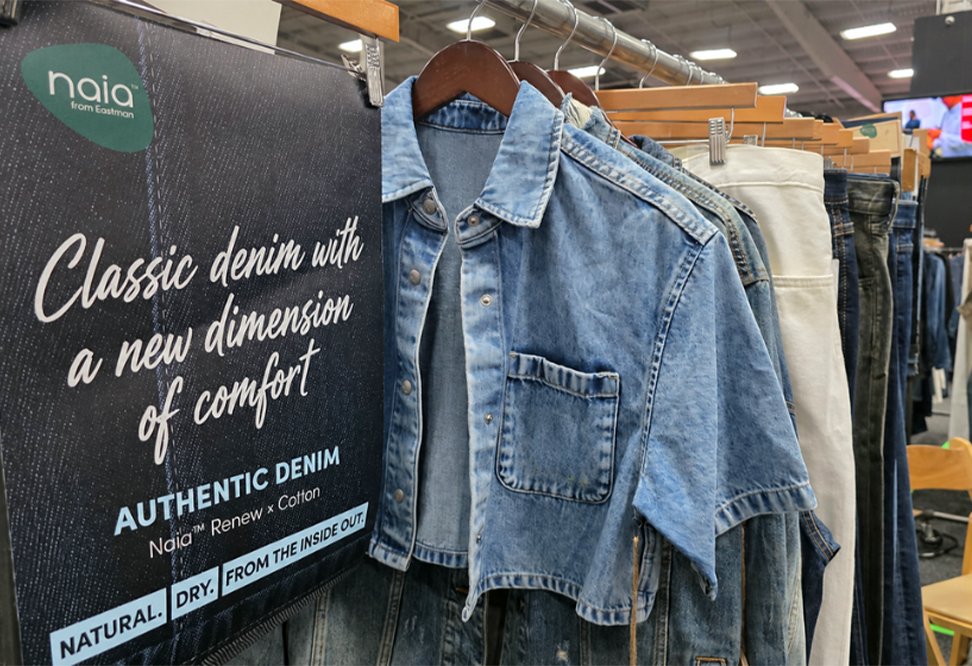
Three fabric directions combine recycled-content cellulose acetate with cotton, lyocell or polyester, targeting softer handle, moisture management and broader denim applications.
Eastman presented an expanded denim proposition for Naia Renew staple fibre at Kingpins New York on July 22–23, organising the offer around three commercial directions: Authentic Denim, Fashion Denim and Performance Denim.
The concept places Naia Renew primarily in the weft, where the fibre sits closer to the wearer’s skin. Eastman’s proposition is that mills can preserve denim’s recognisable outer appearance while improving softness, dryness and comfort from inside the fabric.
Three blends, three markets
Authentic Denim combines Naia Renew with cotton. It is intended to retain conventional denim structure and visual character while adding a softer, less clingy hand before and after garment washing.
Fashion Denim blends the fibre with lyocell to produce lighter, more fluid constructions suitable for shirts, separates and relaxed silhouettes. Performance Denim pairs Naia Renew with polyester, targeting moisture management, quicker drying and odour control for garments moving between casualwear, travel and active use.
The structure gives mills clearer development routes than a single generic fibre proposition. Each combination addresses a different commercial requirement—authenticity, drape or functional comfort—while allowing brands to retain familiar denim styling.
Circularity sits inside the fibre
Naia Renew is a cellulose acetate fibre produced from 60% sustainably sourced wood pulp and 40% GRS-certified recycled waste material. The recycled input is attributed through mass-balance accounting rather than representing a physically segregated 40% recycled fraction in every individual fibre batch.
Eastman uses its carbon-renewal technology to convert difficult-to-recycle waste into molecular building blocks used in cellulose acetate production. The fibre is also designed to blend with natural fibres, other man-made cellulosics and synthetics.
Mills must prove the value
No fabric weights, blend ratios, prices, production volumes or comparative lifecycle data were disclosed for the Kingpins presentation.
Commercial adoption will therefore depend on whether denim mills can verify improvements in moisture management, softness, drying, odour control and wash durability without increasing processing complexity or cost beyond brand tolerance. The next signal will be repeat commercial programmes rather than exhibition samples. Naia Renew’s strongest opportunity lies in giving denim a differentiated wearing experience while maintaining the rugged visual identity consumers still expect.
