

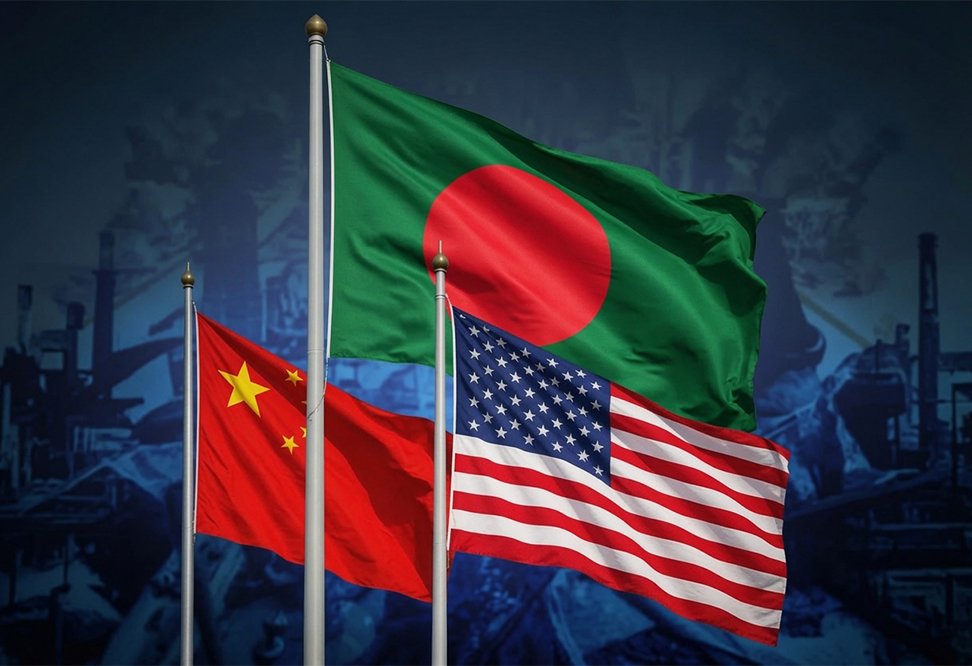
Bangladesh retained its number-two position in the US clothing market during January–May 2026, but falling export value and faster growth from regional rivals expose the limits of sourcing diversification.
Bangladesh exported $3.25 billion of apparel to the United States during the first five months of 2026, ranking behind Vietnam but ahead of China as US buyers continued to reshape their sourcing portfolios.
Vietnam remained the largest supplier, shipping $6.39 billion and recording year-on-year growth of 1.46%. Bangladesh’s exports, however, declined 8.08%, indicating that its improved ranking reflected China’s sharper contraction rather than an expansion in Bangladeshi business. China’s shipments fell 42.75% to $2.80 billion.
China’s retreat reshapes the ranking
The figures demonstrate the scale of the sourcing shift away from China, traditionally the dominant US apparel supplier. Tariff exposure, geopolitical risk and buyer efforts to diversify sourcing have accelerated order migration towards South and Southeast Asia.
Bangladesh remains attractive because of its large garment-manufacturing base, competitive labour-intensive production and established capabilities in cotton trousers, knitwear, shirts and other volume categories. However, the 8.08% decline shows that redirected Chinese orders are not flowing automatically to Bangladesh.
Regional rivals gain momentum
Cambodia increased its US apparel exports by 14.90% during the period, while Indonesia achieved growth of 5.49%. Their performance points to stronger competition for orders requiring flexible capacity, diversified product categories and shorter production cycles.
Bangladesh’s concentration in high-volume, price-sensitive garments remains both a strength and a constraint. Large factories can execute substantial orders efficiently, but dependence on basic products leaves exporters exposed to retailer destocking, price negotiations and demand volatility.
Tariffs raise the commercial stakes
The United States and Bangladesh concluded a reciprocal trade agreement in February 2026 under which most Bangladeshi imports remain subject to a 19% reciprocal tariff, except identified products receiving separate treatment. Apparel exporters must therefore protect competitiveness through productivity, product upgrading and tighter cost control.
The next test is whether Bangladesh can convert its ranking into renewed export growth. That will require faster lead times, greater synthetic-fibre and outerwear capability, automation, traceability and stronger design and product-development services. Without those improvements, Cambodia, Indonesia and other emerging suppliers may capture a larger share of orders leaving China.
