

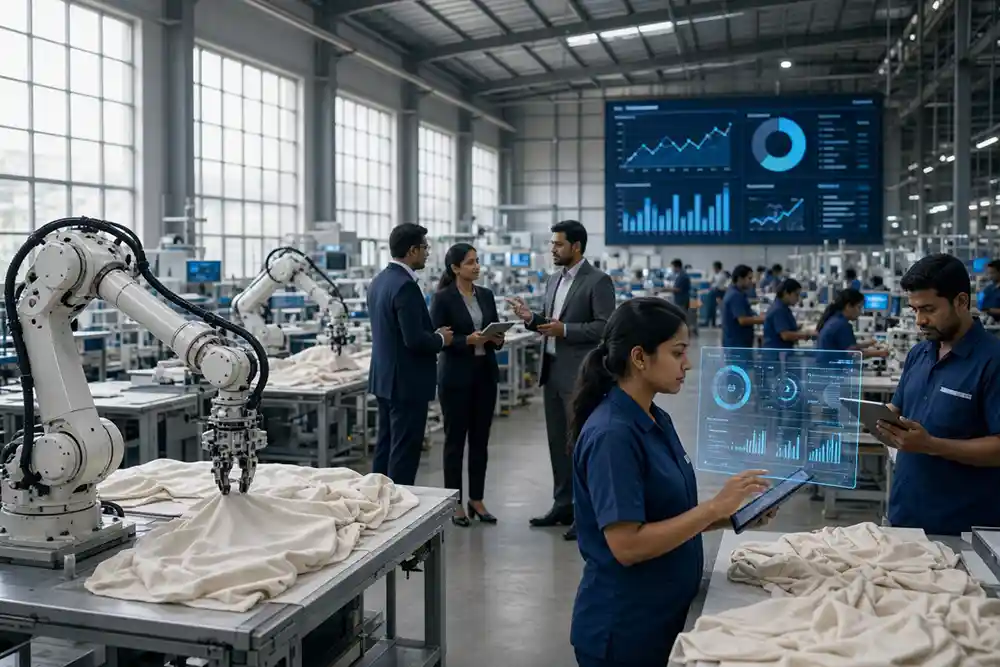
Dhaka’s latest AI gathering adds to a widening national push to move artificial intelligence from policy discussion into productivity, skills and factory-level applications.
Bangladesh’s business community is intensifying its focus on artificial intelligence as manufacturers and service companies look for productivity gains ahead of a more demanding phase of global competition.
The House of Learning & Donating (HOLD) hosted the HOLD AI Summit 2026 in Dhaka on August 23, bringing together corporate leaders, HR professionals, technology specialists, policymakers and academics. Sessions covered AI-enabled human-resource management, enterprise transformation, cybersecurity and the implications of AI for productivity and employment.
Apparel enters the discussion
The textile connection was explicit. Imteaz Mustafa, Head of Organisational Development and Talent Management at Fakir Fashion, addressed AI applications for HR professionals, reflecting the growing interest of Bangladesh’s apparel sector in applying AI beyond design and automation to workforce management.
Bangladesh garment manufacturers are already evaluating AI for production planning, automated quality inspection, predictive maintenance, fabric optimisation and demand forecasting. Industry leaders at the BAYLA Future Summit in July similarly called for faster adoption of AI, automation and Industry 4.0 to strengthen competitiveness after LDC graduation.
Policy begins catching up
The government has meanwhile developed a National Artificial Intelligence Policy 2026–2030, with Draft V2.0 released for public consultation earlier this year. The policy process centres on responsible, inclusive and innovation-driven AI development, although final adoption remains pending.
Bangladesh is also preparing a wider business AI ecosystem. The Dhaka Chamber of Commerce and Industry’s AI Business Summit includes dedicated textile, RMG and manufacturing categories, with applications ranging from production intelligence to factory automation.
The productivity test comes next
For Bangladesh’s apparel industry, conferences alone will not determine competitiveness. The important metrics will be minutes per garment, defect rates, fabric utilisation, planning accuracy, machine downtime and management productivity.
The next stage is therefore deployment: converting AI awareness into factory systems capable of delivering measurable productivity gains without creating another layer of disconnected software.
