

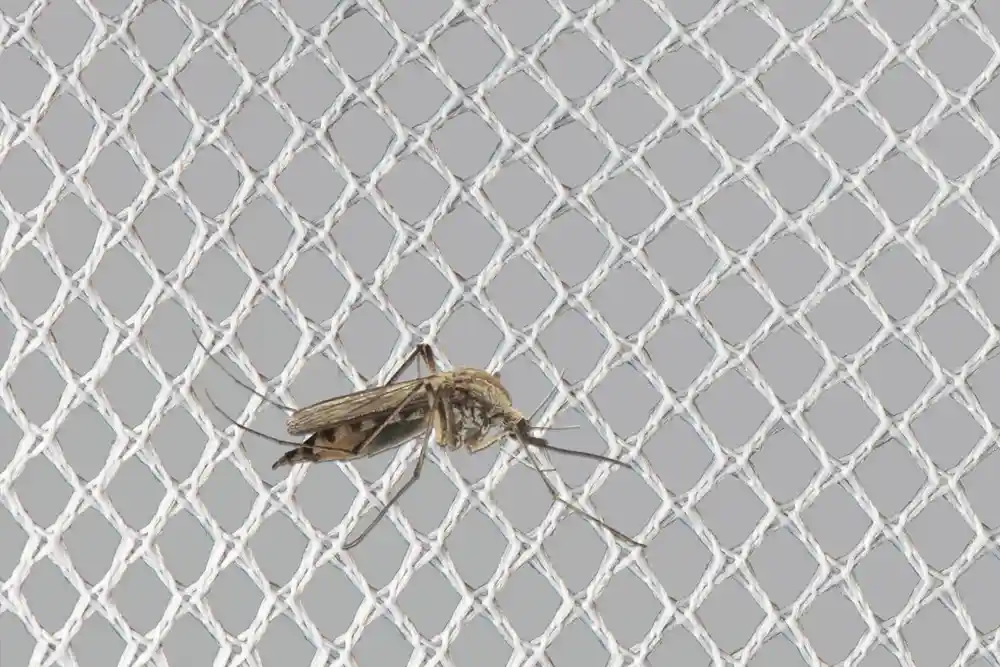
The TM 2 and HKS 2-M combine high-speed warp knitting with tightly controlled mesh geometry, targeting the recurring global demand for long-lasting insecticidal mosquito nets.
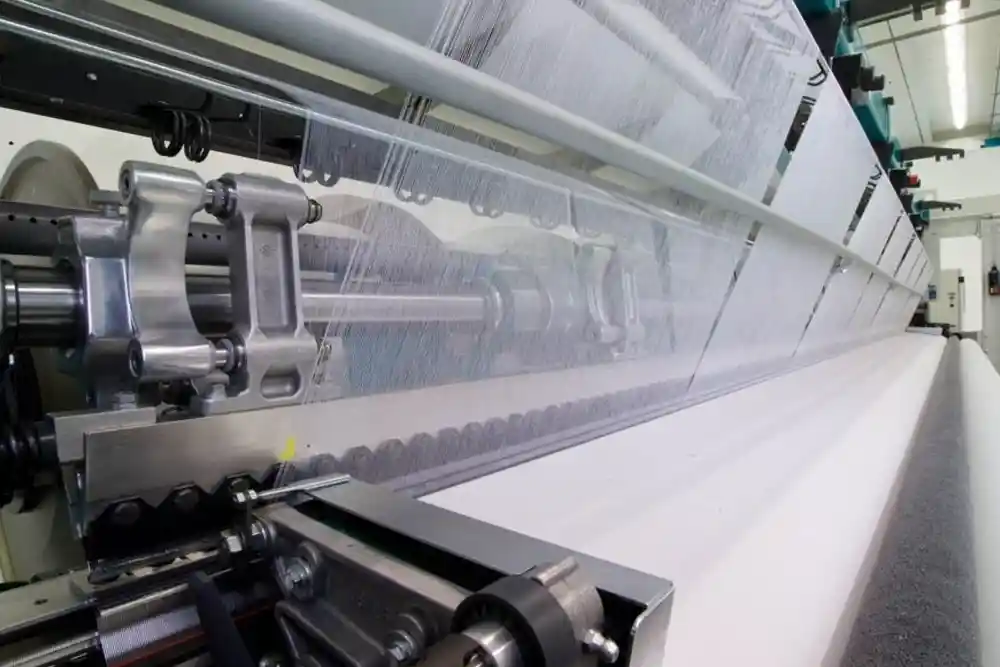
KARL MAYER is highlighting its two-bar tricot technology for high-volume mosquito-net manufacturing, positioning warp knitting as an efficient production route for a textile product whose dimensional consistency and strength directly influence disease protection.
The company primarily recommends its TM 2 and HKS 2-M machines for mosquito nets, using E28 or E32 gauges for polyester multifilament yarns. Nets made from HDPE monofilaments are typically produced at E14, although specifications can vary by construction.
Precision is a performance requirement
Mosquito nets must balance apparently conflicting requirements: mesh openings must be sufficiently small and uniform to block mosquitoes while maintaining enough openness for airflow.
Strength is equally important. KARL MAYER cites WHO specifications requiring minimum bursting strength of 505 kPa for multifilament nets using 100-denier yarn and 220 kPa for 75-denier constructions.
Material choice also changes the manufacturing route. Polyester nets are normally impregnated with insecticide during finishing, while for HDPE nets the insecticidal agent can be incorporated into the polymer granulate before filament production.
KARL MAYER says the accuracy of its tricot systems supports consistent mesh openings, fabric weight, dimensional stability and tear resistance.
Output can exceed 128 metres an hour
A KARL MAYER mosquito-net construction produced on the HKS 2-M or TM 2 in E28 gauge has a theoretical output of 128.6 running metres per hour at 180-inch knitting width and 100% efficiency. The diamond-shaped construction also provides natural stretch and drape.
Three-bar machines in E18 can additionally be used for specialised multifilament protective-net constructions.
Recurring demand supports machinery investment
The commercial opportunity extends beyond conventional household nets. Long-lasting insecticidal nets are distributed on a massive scale in malaria-affected regions and typically require replacement every three to five years, creating recurring production demand.
For warp-knitting manufacturers, the opportunity therefore combines large production runs, relatively standardised constructions and demanding quality specifications. The key investment metrics remain actual operating efficiency, yarn cost, fabric weight, machine utilisation and compliance with international performance requirements.
