

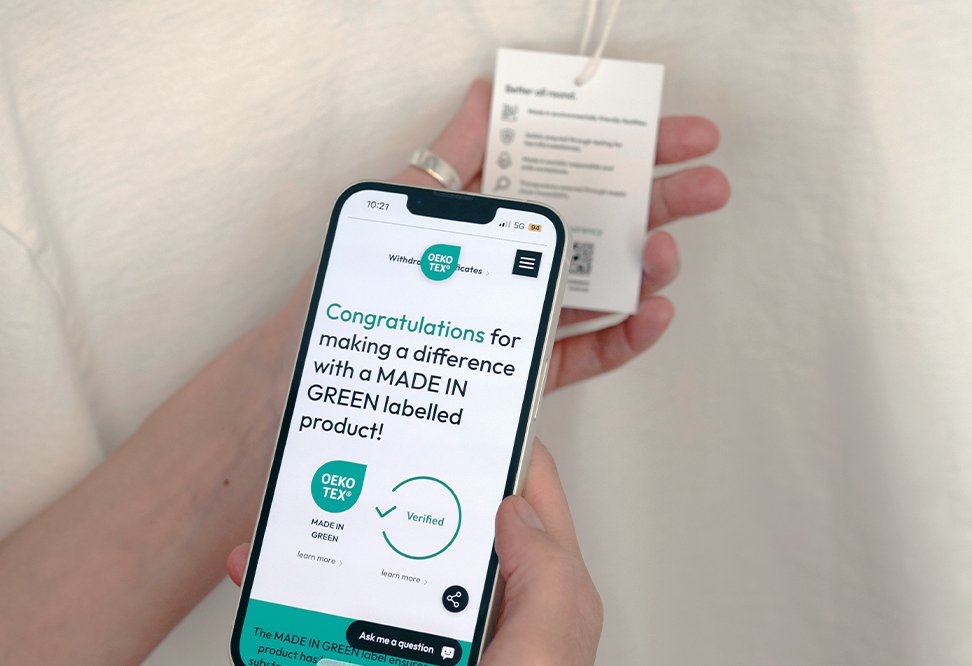
Its 2025/26 annual report shows rapid growth in traceable organic cotton and product labelling as regulation increasingly demands verifiable supply-chain evidence.
OEKO-TEX says traceability is becoming a prerequisite for textile and apparel market access as regulators in the EU, United States and Canada demand stronger evidence of where products originate and how they are manufactured.
Its 2025/2026 Annual Report, released September 2, highlights accelerating adoption of traceability systems across organic cotton and finished textile products. OEKO-TEX argues that companies able to demonstrate product origin from fibre through finished goods will be better equipped for customs controls, regulatory investigations and potential trade restrictions.
Organic cotton scales rapidly
Supply-chain partners handling OEKO-TEX ORGANIC COTTON-certified material now operate in more than 20 countries, while certified cotton volume has exceeded 33 million kilograms at the ginning stage.
More significantly, the number of ORGANIC COTTON certificates issued increased by over 200% year on year, pointing to rapidly rising demand for independently verified fibre origin.
OEKO-TEX is also working with TextileGenesis to digitise ORGANIC COTTON transactions. Its token-based traceability infrastructure is intended to make transaction records more secure and scalable while reducing administrative work across multi-tier supply chains.
MADE IN GREEN posts double-digit growth
Demand for the OEKO-TEX MADE IN GREEN label, which combines product testing with verified production and supply-chain information, increased by more than 13% during the year.
The timing is important. From September 27, 2026, implementation of the EU’s Empowering Consumers for the Green Transition Directive, EU 2024/825, strengthens requirements around environmental claims and sustainability labels, including independent third-party verification of certification schemes. OEKO-TEX says its certificates and labels will remain compliant under the new framework.
Traceability moves into sourcing infrastructure
For textile manufacturers and exporters, the commercial message is increasingly clear: a certificate alone may no longer be enough. Buyers will increasingly need transaction-level evidence connecting fibre origin, processing stages, suppliers and finished products.
This turns traceability from a sustainability communication tool into core sourcing and compliance infrastructure. The manufacturers best positioned for regulated markets will be those able to integrate certification data with digital chain-of-custody records, supplier information and product-level traceability — particularly as Europe moves toward more extensive sustainability and product-data requirements.
