IGERS’ €8 million plant shows that the bottleneck in textile-to-textile recycling is increasingly the quality and consistency of feedstock delivered to the recycling process.
Italian recycler IGERS has opened an integrated textile-recycling facility in San Pietro Mosezzo, Novara, combining automated material identification, impurity removal, sorting, mechanical opening and digital traceability to convert post-consumer and post-industrial textile waste into fibre suitable for spinning.
Inaugurated on 21 September 2026, the plant can process 4 tonnes per hour and is authorised for up to 19,200 tonnes annually. Investment totalled approximately €8 million, including €1.3 million from Italy’s National Recovery and Resilience Plan.
Sorting determines recycling quality
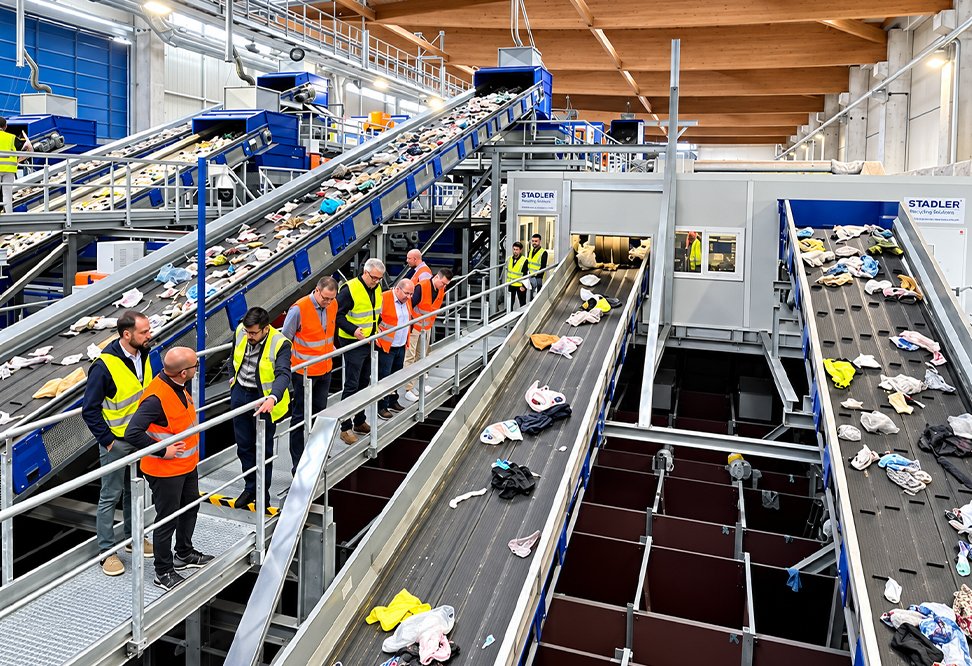
German plant specialist STADLER engineered the automated sorting system, incorporating two TOMRA near-infrared optical sorters and 16 conveyors.
The first NIR stage separates pure materials such as 100% cotton or wool from blends and contaminants. A second pass removes non-textile components and separates buffered material by fibre type. Material can then be directed to baling, storage, recirculation or fibre opening depending on its composition and quality.
IGERS’ patented process subsequently removes components including buttons, zippers, labels and elastic materials, homogenises the feedstock and mechanically frays it while attempting to preserve sufficient fibre length for spinning. Each batch remains digitally traceable through the process.
Europe needs industrial recycling infrastructure
The investment aligns with tightening EU textile-waste policy. The revised Waste Framework Directive requires producer-responsibility systems to finance collection, sorting, reuse and recycling and specifically seeks to expand fibre-to-fibre recycling.
Pakistan competitiveness takeaway
Pakistan already possesses significant expertise in mechanically recycling pre-consumer cotton waste, but post-consumer textiles present a harder challenge: unknown composition, blends, trims, contamination and inconsistent fibre length.
The Italian model suggests the next capability is not simply another tearing line. Pakistan needs an integrated chain of collection → automated fibre/colour identification → trim removal → quality grading → controlled blending → fibre opening → traceability → spinning.
For Pakistani spinning groups, the strategic opportunity is to move from buying generic textile waste toward producing specified, traceable recycled feedstocks with predictable fibre composition and spinning performance. That infrastructure could become increasingly valuable as European EPR rules create larger and better-organised flows of textile waste requiring high-value recycling.