

June’s recovery offers a stronger starting point for the new fiscal year, but Bangladesh still needs better competitiveness and wider product diversification to reverse a year of slow export performance.
Bangladesh earned US$48.0 billion from merchandise exports in FY2025–26, down 0.58% from US$48.28 billion a year earlier and well below the government’s US$55 billion target. The final result was lifted by a sharp June rebound, but it does not remove the industry’s underlying pressures: weaker demand across much of the year, elevated financing and energy costs, logistics constraints and intensifying competition in key apparel markets.
June provides a better exit signal
Merchandise exports rose nearly 26% year on year to US$4.20 billion in June. Ready-made garment exports increased 21.52% to US$3.38 billion, with knitwear up 19.49% and woven-garment shipments up 24.02%.
The monthly result needs careful interpretation. Exporters noted that June 2025 had been depressed by extended Eid-ul-Adha holidays, whereas more of the 2026 holiday effect fell in May. The rebound nevertheless shows that buyers continued to place orders when production and shipment conditions normalised.
Apparel remains the decisive vulnerability
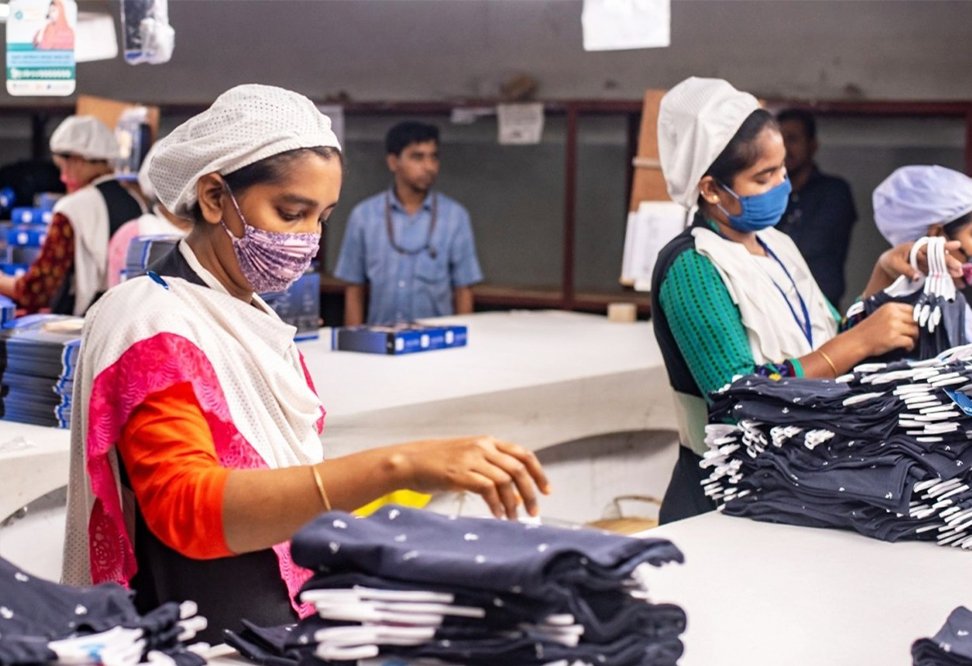
RMG exports reached US$38.70 billion for the full fiscal year—more than four-fifths of Bangladesh’s merchandise exports—but fell 1.64% year on year. This concentration magnifies the consequences of weaker orders, price pressure and compliance costs in the United States and Europe.
The United States remained Bangladesh’s largest single export destination, buying US$9.04 billion of goods in FY2025–26, up 4.09%. Germany and the United Kingdom retained second and third positions, respectively. Those figures provide reassurance on market depth, but they do not reduce the need for higher-value apparel, man-made-fibre capability, shorter lead times and better factory productivity.
Diversification gains need scale
Several non-apparel categories outperformed. Leather and leather products rose 7.09% to US$1.23 billion; jute and jute goods increased 7.75% to US$883.69 million; home textiles advanced 6.52%; and engineering-product exports grew 21.77%.
These gains are commercially useful but remain too small to offset a soft garment year. The priority for FY2026–27 is to turn June’s momentum into sustained order growth while addressing energy reliability, high borrowing costs and logistics performance.
Bangladesh’s export system has demonstrated resilience. Its next test is whether that resilience can become a more diversified, margin-led and less apparel-dependent growth model.
