

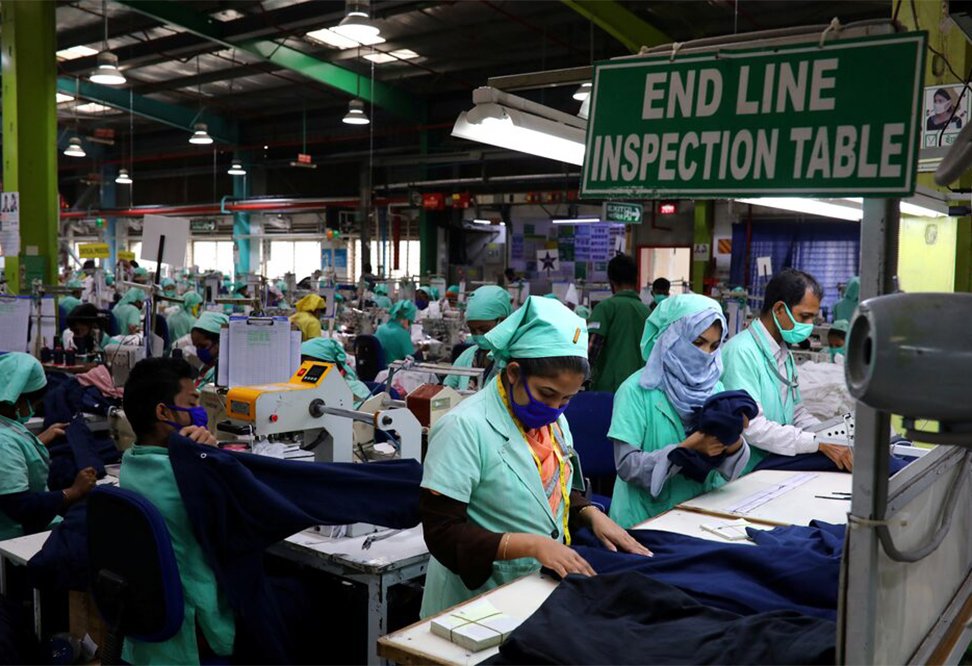
The UK recovery helped offset a weak July, while more flexible sourcing rules are also reshaping the competitive equation for Pakistan and other developing-country suppliers.
Bangladesh’s garment exports to the United Kingdom rose 10.53% year on year in August 2026, reversing a 2.44% decline in July. UK-bound shipments reached $915.63 million during July–August FY2026/27, up 3.74% from $882.62 million a year earlier.
The rebound accompanied a stronger month for Bangladesh’s wider apparel industry. Total RMG exports increased 13.92% in August to $3.60 billion, with knitwear rising 14.88% to $2.03 billion and woven garments 12.70% to $1.57 billion.
UK remains an important anchor
Bangladesh earned about $4.39 billion from UK garment exports in FY2025/26. The July–August monthly average of $457.82 million was around 25% above the previous fiscal year’s monthly average, although two months are too short to establish a sustained trend.
Market access has also become more flexible. From January 1, 2026, Britain relaxed garment rules of origin under its Developing Countries Trading Scheme, allowing eligible countries greater use of imported fabrics and other inputs while retaining preferences.
Pakistan competitiveness takeaway
Pakistan stands to benefit from exactly the same reform. It is an Enhanced Preferences DCTS country, receiving zero tariffs on 92% of product lines. Since January, garment exporters have also gained simplified origin rules, including removal of the previous double-transformation requirement.
This is particularly important for Pakistan’s weaker MMF and fashion-apparel segments, because manufacturers can source a larger share of suitable fabrics internationally without automatically losing UK preference.
But the policy change benefits competitors too. Bangladesh already exported $4.39 billion of garments to Britain last year and possesses deeper buyer relationships and greater apparel scale.
For Pakistan, the implication is clear: tariff preference is no longer enough. Greater UK market share will depend on faster product development, MMF capability, flexible sourcing, shorter lead times, reliable energy and stronger buyer engagement. As rules-of-origin constraints decline, operational competitiveness becomes the differentiator.
