

The new agreement matters because it extends recycled cellulosic feedstock beyond viscose and into lyocell, a technically more demanding fibre route with wider performance potential.
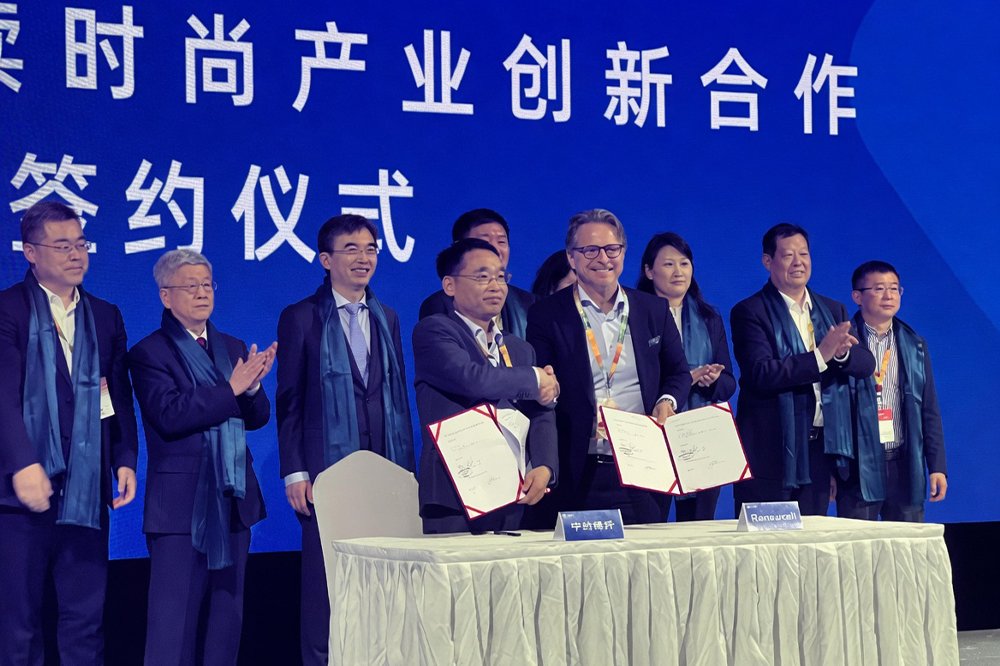
Circulose has signed a new collaboration with China Textile Academy Green Fibre (CTA) to offer lyocell fibres made with CIRCULOSE® pulp, marking an important step in widening the use of textile-to-textile recycled feedstock in man-made cellulosics. Circulose says the partnership will initially provide both standard and non-fibrillating lyocell grades, with limited commercial availability in 2026 and a larger scale-up planned for 2027.
The significance is technical as well as commercial. Lyocell is generally viewed as a more sensitive process than viscose because it relies on tighter control in solvent spinning and fibre formation. That makes the successful use of recycled dissolving pulp more challenging. Circulose CEO Jonatan Janmark said CTA’s ability to produce lyocell from CIRCULOSE® is a strong indication both of the Chinese producer’s technical capability and of the pulp’s performance.
The partnership also strengthens a relationship that predates Circulose’s relaunch. Back in 2023, when the company was still operating as Renewcell, CTA Green Fibre signed an agreement to purchase 18,000 tonnes of Circulose pulp over five years for use in lyocell production. The new announcement suggests that earlier development work is now moving closer to commercial output.
CTA is not just acting as a development partner. Circulose says the company has committed to buy a defined volume of CIRCULOSE® pulp over the coming years, helping provide the demand visibility needed for recycler investment and scale-up. That matters because one of circular textiles’ biggest bottlenecks is not only technology, but stable downstream offtake.
For the wider market, the message is clear: recycled cellulosics are no longer being positioned only as a viscose story. If lyocell made with recycled pulp can scale with consistent quality, it could open a more commercially attractive route into higher-performance, lower-impact fibre applications.
