

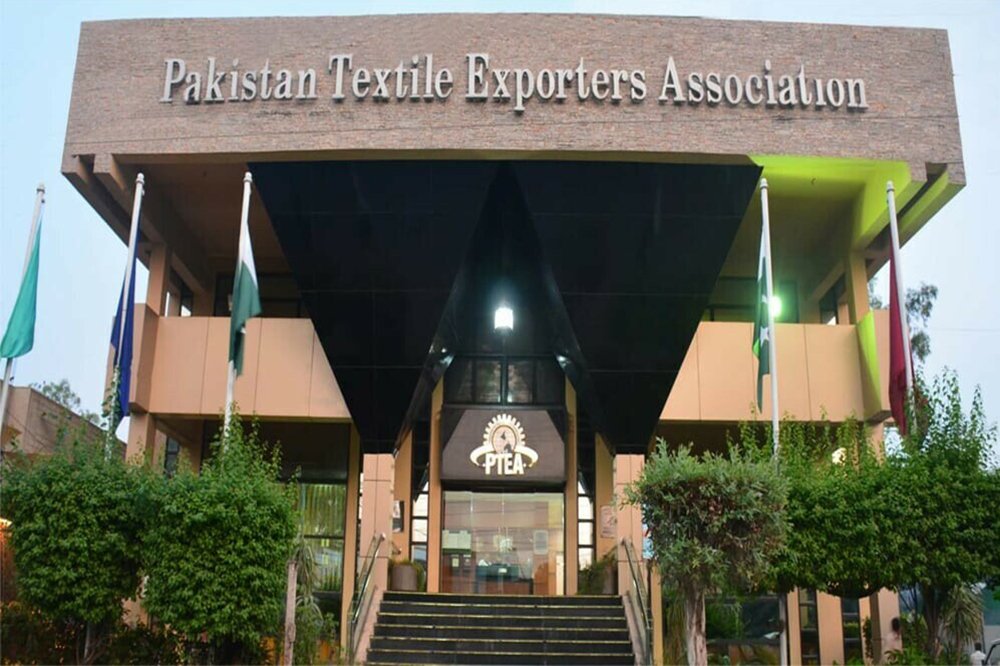
The industry says FY2025–26 textile exports are likely to close near $18 billion, but argues that policy distortions in energy, taxation and export facilitation are still preventing Pakistan from converting capacity into stronger export growth.
Pakistan’s textile industry is pressing Islamabad to use Budget 2026–27 for deeper structural reform rather than incremental relief, with Pakistan Textile Exporters Association (PTEA) Patron-in-Chief Khurram Mukhtar urging the government to focus on energy pricing, tax simplification, export facilitation and financing if it wants to unlock the sector’s unrealized export potential. The intervention comes as Pakistan’s textile exports remain broadly flat: official data show July–March FY2025–26 textile and clothing exports at $13.545 billion, down 0.5% from a year earlier, while March exports fell 7.06% year on year to $1.328 billion.
Mukhtar’s central argument is that the sector is still being priced out by domestic policy costs. He wants industrial energy tariffs aligned with regional benchmarks, cross-subsidies removed, peak-hour restrictions lifted, and the grid transition levy on gas abolished so combined heat and power remains commercially viable. On taxation, he is calling for exporters to move to a Final Tax Regime, with the elimination of super tax, minimum tax and advance tax, alongside faster and more automated refund processing to ease liquidity strain. These proposals were reported by local media covering PTEA’s budget demands.
The export-support agenda is equally pointed. PTEA wants the Export Facilitation Scheme restored “in its true spirit” for local and imported inputs, zero-rating of utilities under the scheme, and a targeted 5% Duty Drawback of Taxes and Levies for value-added segments. Mukhtar also linked competitiveness to broader reform of the cotton chain, digitization of transactions, SME classification, and better access to ERF and LTFF financing.
The industry’s frustration is understandable. Pakistan’s textile exports recovered to $17.45 billion in calendar 2024, but the current fiscal year has again shown how fragile momentum remains. Without a more stable and export-oriented policy framework, the gap between the industry’s actual export level and its stated potential is likely to persist.
