

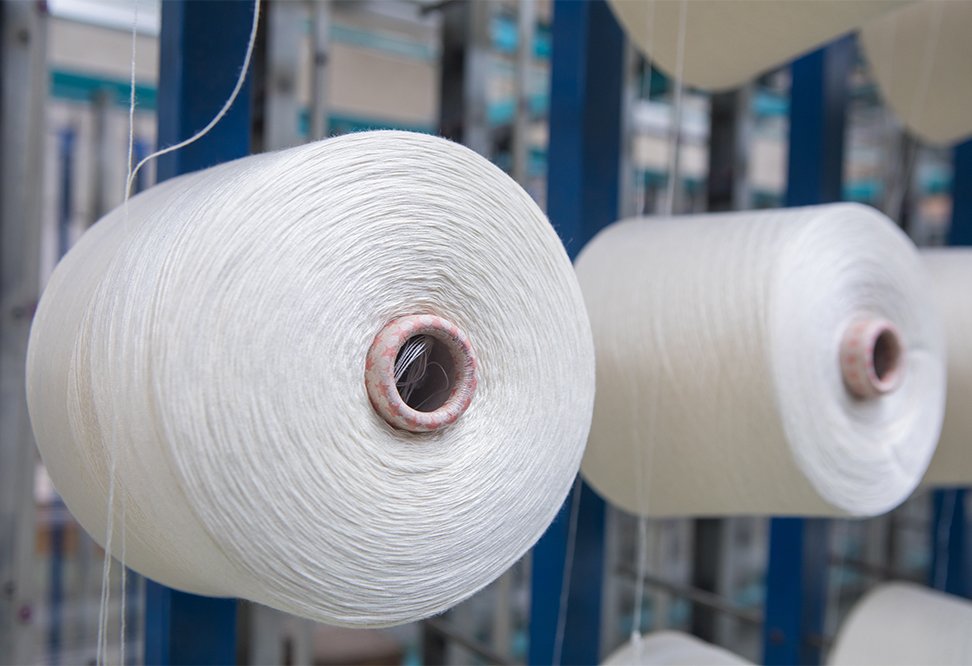
The next upgrade wave will be driven less by new spindle races and more by energy efficiency, labour reduction, yarn quality and lifecycle service.
The global cotton spinning machinery market is expected to grow steadily through 2035 as mills replace ageing equipment and invest in automation. IndexBox projects a baseline CAGR of about 4.8% from 2026 to 2035, with demand supported by replacement of old ring frames, expansion in rotor and compact spinning, and rising adoption of Industry 4.0 features in textile mills.
Replacement, not only expansion
The strongest driver is the installed base. IndexBox estimates that 60–70% of machines operating in developing regions are more than 15 years old, beyond the typical 10–15-year economic life. That creates a multi-year market for replacement, retrofits, automatic doffing, compact attachments, digital sensors, remote diagnostics and energy-efficient drives.
Ring spinning remains the largest demand segment, with an estimated 45% market share. Rotor spinning accounts for about 25%, supported by denim, towels and coarse-count yarn demand, while compact spinning is the fastest-growing quality-focused segment, with projected growth of 6.2% annually to 2035.
Automation becomes the differentiator
Automation content now represents an estimated 25–35% of total machine cost, and IndexBox expects it to exceed 40% of machine value by 2035. Premium fully automated lines can command 40–60% price premiums over standard systems, especially where mills target labour savings, consistent yarn quality and predictive maintenance.
The market still faces a near-term investment overhang. ITMF reported that 2024 spinning machinery shipments fell sharply, with short-staple spindle deliveries down 40% to 5.92 million units and open-end rotor deliveries down 39% to 623,000 units. Rieter’s 2025 annual report similarly described cautious investment activity in new machinery, while its after-sales order intake rose 6%, underlining stronger demand for service and lifecycle support.
Asia will set the pace
Asia-Pacific holds about 65% of global demand, led by China, India, Bangladesh and Vietnam. The next cycle will favour suppliers that combine machinery, automation, retrofits, spare parts and mill-level process support. For spinners, the buying decision is shifting from machine price to total cost per kilogram of yarn.
