

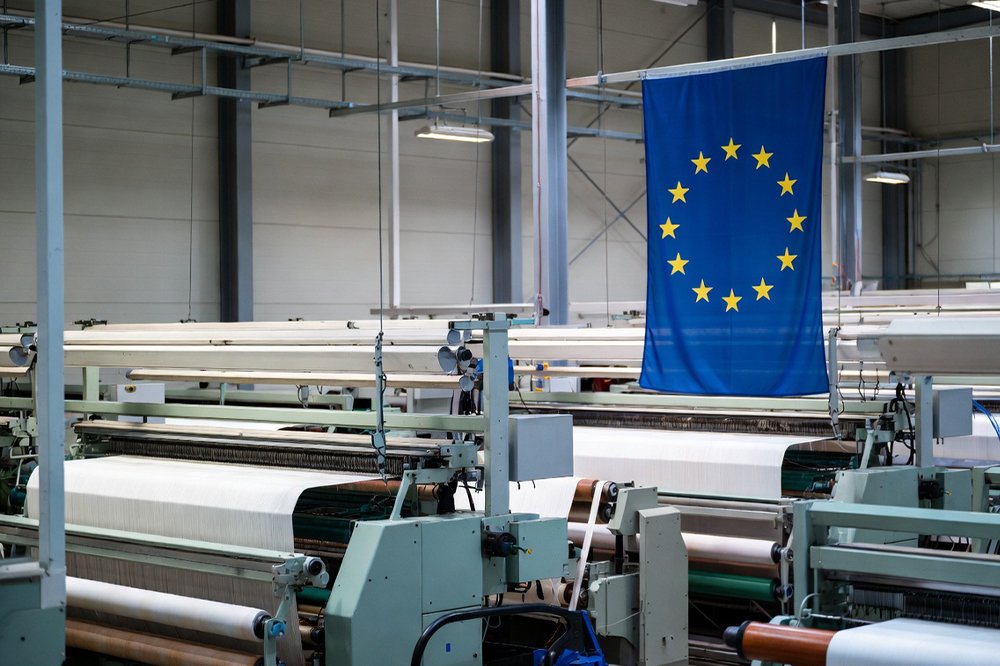
The industry body says the downturn is no longer cyclical noise but a widening competitiveness problem, driven by energy costs, weak demand, import pressure and policy lag.
Europe’s textile and apparel industry has recorded a third consecutive year of negative performance, with declines in production, turnover and employment across 2025, according to Euratex’s latest economic update. The industry group says the trend confirms a continued erosion of competitiveness across the region rather than a short-lived market correction.
Euratex is framing the causes in stark terms. It points to structurally high energy costs, weak consumer demand, growing import pressure from Asia, unfair competition from online platforms, and an increasingly heavy regulatory burden on European manufacturers. The organisation argues that these combined pressures are now pushing factories to close across the continent, with consequences extending beyond fashion into healthcare, defence, mobility, construction and agriculture-linked textile value chains.
Policy response is moving too slowly
The group acknowledges that the EU is preparing several policy initiatives, including the Industrial Accelerator Act, reform of the Union Customs Code, and work under the Energy Union. But Euratex’s core complaint is timing: the policy calendar is not matching the speed of industrial deterioration. It is calling for immediate steps to reduce energy costs, simplify regulation, strengthen market surveillance, and restore what it describes as a genuine level playing field for European producers.
More than a fashion-sector warning
Euratex is also making a broader industrial-policy argument. The organisation says textiles should be treated as a strategic ecosystem, not only because of their role in clothing and home products, but because they supply essential technical and industrial applications and underpin circularity through reuse and recycling. That is why it wants the European Commission and member states to take concrete action before the end of 2026.
Mario Jorge Machado, Euratex president, put the warning bluntly: every week textile companies are closing, production is shifting elsewhere, and Europe is becoming more dependent on external suppliers. If that continues, the continent risks undermining both its industrial base and its climate ambitions at the same time.
