

The strongest proof of the platform’s value is not visibility at the fair, but the industrial partnerships and scale-up milestones that followed it.
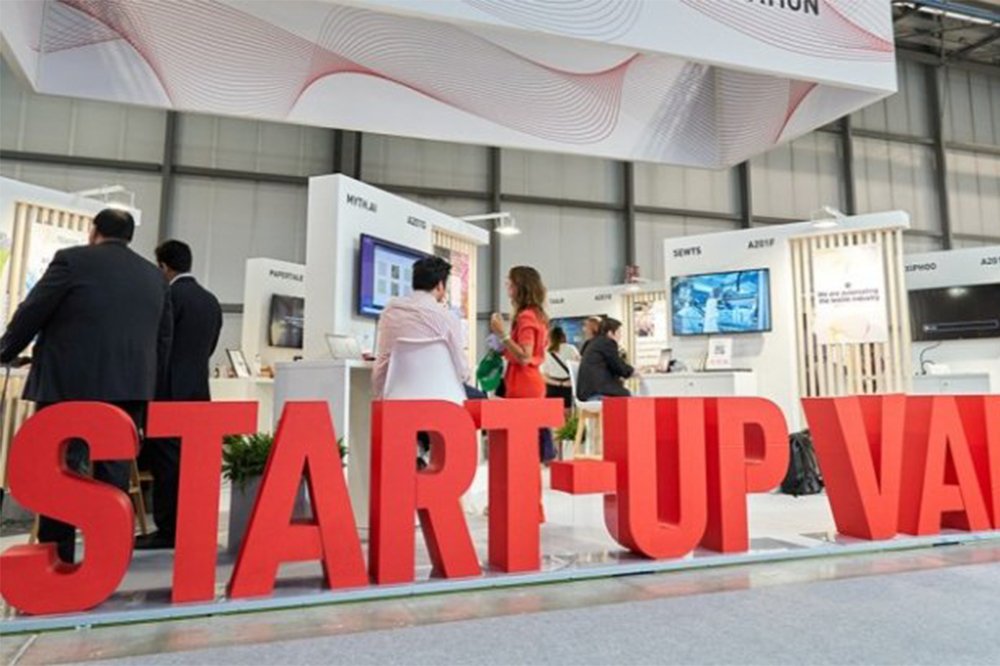
For textile start-ups, exhibitions often promise exposure but deliver little beyond conversation. ITMA’s Start-Up Valley appears to be an exception. The showcase at ITMA 2023 in Milan produced a visible pattern: young companies using the platform not merely to present ideas, but to accelerate commercialisation, partnerships and industrial validation.
TreeToTextile used its ITMA debut as a springboard while scaling a €35 million regenerated-cellulose demonstration plant in Sweden. Since then, Lenzing has acquired a controlling stake and is preparing both higher output and a first industrial-scale facility. Noosa, another participant, says it has expanded production capacity for its circular PLA fibres to 6,000 tonnes per year while broadening its product range.
The most striking case is Weffan. Its 3D weaving process, first presented through Start-Up Valley, has now reached commercial validation through collaboration with Balenciaga and support from Kering’s Material Innovation Lab. That is significant because it shows how a start-up concept can move from exhibition floor to luxury retail application.
As ITMA 2027 approaches, the lesson is clear. In textiles, innovation needs more than invention; it needs access to machinery partners, investors and industrial credibility. Start-Up Valley is increasingly functioning as that bridge.

