

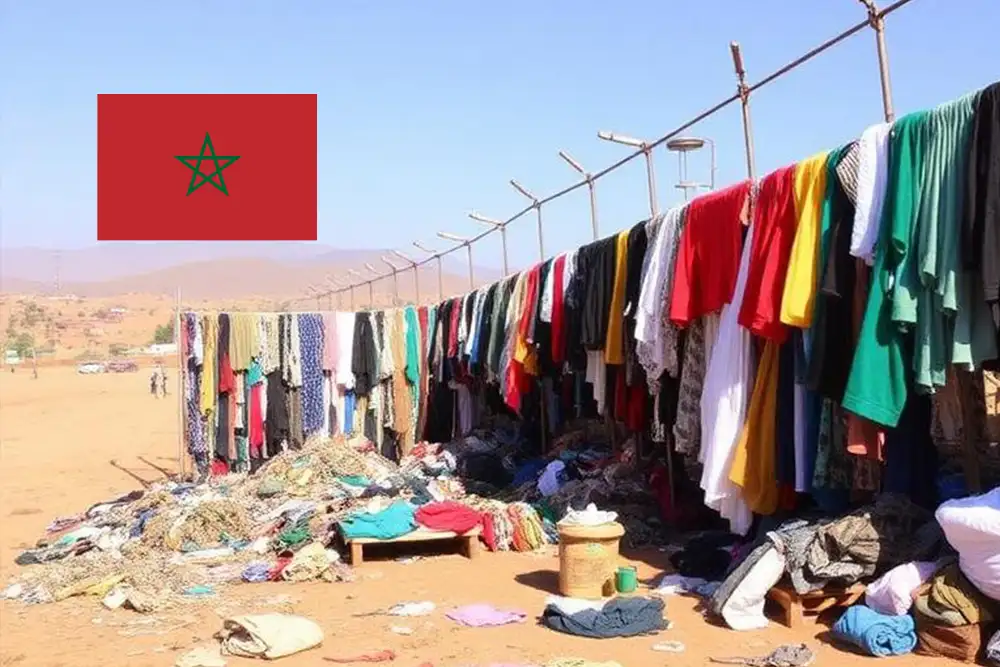
IFC-backed pilot trials show that textile circularity can become a competitiveness strategy for Morocco, not only a waste-management response.
Morocco’s textile-waste recycling sector could attract US$1.9 billion in additional private investment and create more than 30,000 jobs if scaled with the right policy and industrial support, according to the International Finance Corporation. The finding comes from pilot trials under the Morocco Textile Circularity programme, which tested whether factory offcuts could be converted into commercially usable manufacturing inputs.
Pilot results strengthen the business case
The pilot more than doubled its original target, converting 427 metric tons of textile offcuts into new materials, with a further 2,400 tons committed for recycling. IFC said recycled-content fabrics met standard commercial quality benchmarks across all tested parameters, indicating that such materials can re-enter supply chains without loss of performance or quality.
The environmental case is also significant. A life-cycle assessment found that using recycled materials could reduce carbon emissions by around 18% and water use by more than 60% compared with conventional production.
Europe raises the urgency
Morocco’s opportunity is closely linked to its export geography. The EU absorbs around 93% of Morocco’s textile exports, making European sustainability, traceability and recycled-content rules especially important for Moroccan manufacturers. IFC noted that the EU’s Digital Product Passport is expected to enter into force in 2027, while mandatory textile extended producer responsibility schemes are also expected across member states.
This means circularity is becoming a market-access issue. Moroccan suppliers that can document waste origin, recycled content, processing route and product traceability will be better positioned with European buyers.
Informal workers and industrial gaps
The transition also has a labour dimension. More than 80% of Morocco’s textile waste collectors currently operate informally, but IFC research suggests up to 75% could move into formal status within five years with proper institutional support.
The next challenge is execution. IFC recommends reclassifying factory offcuts as industrial by-products, reforming customs rules, creating a national traceability platform, and investing in domestic spinning capacity so recycled fibre can be processed locally rather than exported. If these reforms move quickly, Morocco could turn textile waste into a new industrial advantage.
