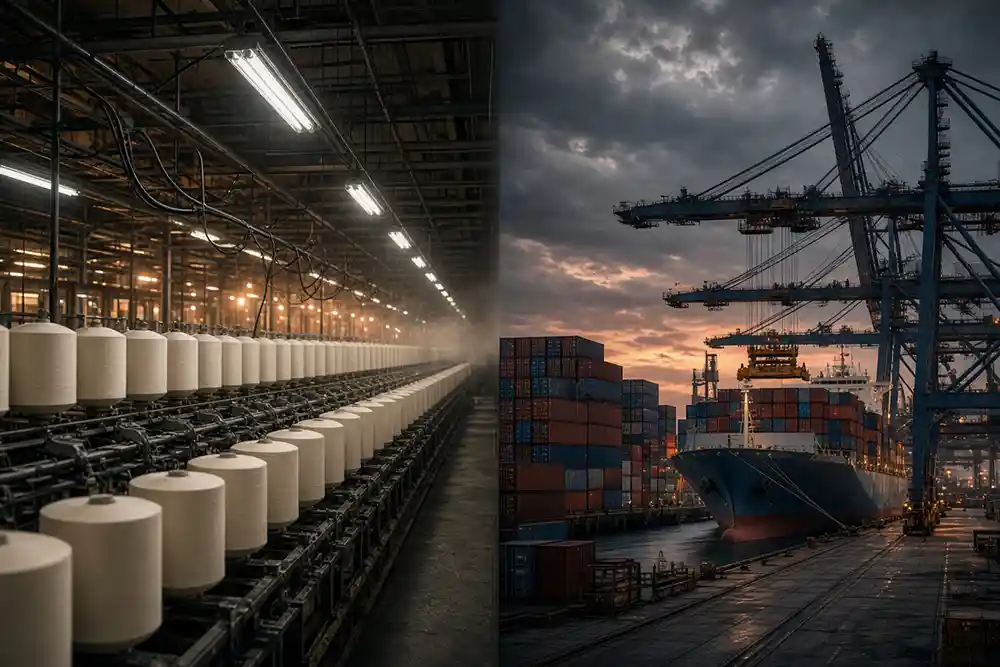
Exporters are confronting a proposed Rs2.52/kWh electricity adjustment just as post-strike freight rates to the US have jumped more than 300%, intensifying pressure on margins, delivery reliability and investment.
Pakistan’s textile and apparel exporters are warning of a renewed competitiveness squeeze as volatile electricity tariffs collide with a severe post-strike logistics shock.
The Pakistan Textile Exporters Association (PTEA) has rejected a proposed Rs2.52/kWh Fuel Charges Adjustment (FCA) for July 2026, while exporters report that sea freight to the US West Coast has risen from about $1,800 to $8,500 per container after a nine-day goods-transport strike disrupted access to Karachi Port and Port Qasim.
Power costs remain unpredictable
PTEA has asked the Prime Minister’s Office and Special Investment Facilitation Council to address what it calls the B3/B4 voltage-level tariff anomaly and move industrial pricing toward the actual cost of service.
The association argues that exporters cannot absorb recurring changes from FCAs, quarterly adjustments and base-tariff revisions because export orders are typically negotiated months in advance at fixed prices. It has called for a 10-year industrial energy roadmap covering tariffs, cross-subsidies, grid charges, renewable integration and distributed generation.
NEPRA has previously disputed the existence of the B3/B4 anomaly, arguing that total tariffs already decline for consumers connected at higher voltage levels.
Freight compounds the pressure
The August 8 transport strike prevented containers reaching ports before vessel cut-offs, generating missed bookings, rollovers, demurrage and storage charges. Export associations estimate economic losses of around Rs50 billion per day, or Rs450 billion across nine days.
Post-strike freight to the US East Coast reportedly rose from $1,800 to $8,000 per container, while exporters also faced additional general rate increases and surcharges of up to $1,000. Around 35% of Pakistani exports are shipped under freight-inclusive terms, leaving exporters directly exposed to these increases.
Competitiveness is becoming systemic
The two disruptions illustrate a wider problem: Pakistani exporters are being forced to manage energy-price volatility and logistics unreliability simultaneously.
The next policy test is therefore broader than tariff relief. Export competitiveness increasingly depends on predictable industrial electricity pricing, uninterrupted cargo movement and dependable shipping capacity—without which productivity investments and export incentives struggle to translate into sustainable orders.