

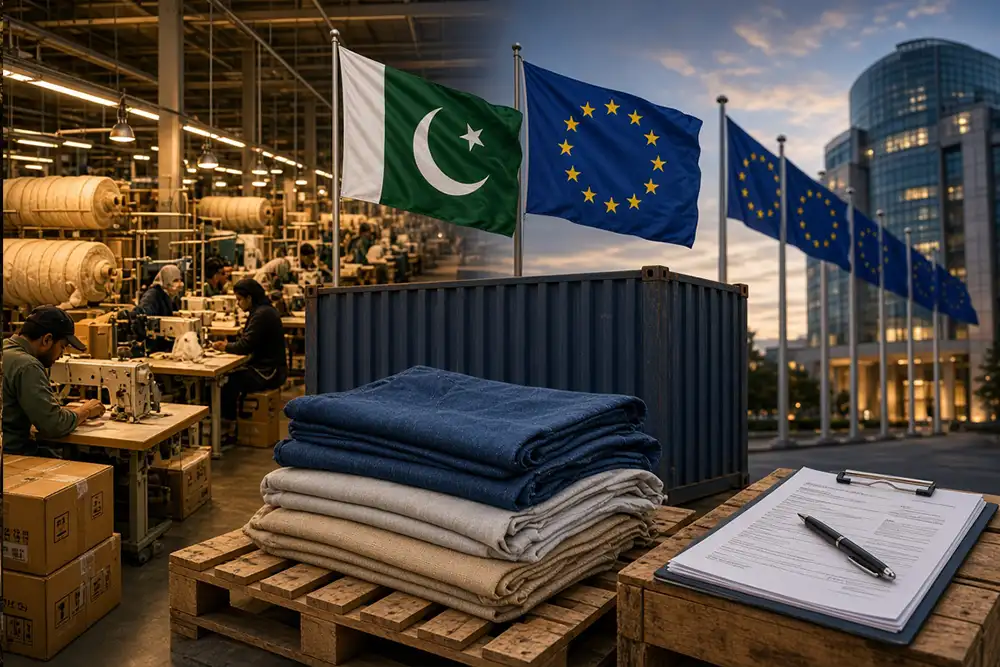
The EU’s largest GSP+ beneficiary must reapply under a tougher 32-convention framework, putting billions of euros of textile and apparel exports—and their zero-duty advantage—under closer scrutiny.
Pakistan’s preferential access to the European Union cannot be taken for granted, EU Ambassador Raimundas Karoblis has warned, as Islamabad prepares to reapply for GSP+ status under a more demanding regime.
The EU’s new GSP Regulation takes effect on January 1, 2027. Existing GSP+ beneficiaries including Pakistan will retain their preferences during a transition period through December 31, 2028, but must submit a new application to continue benefiting from January 2029.
Compliance bar moves higher
The new GSP+ framework expands the required international conventions from 27 to 32, covering human and labour rights, environmental and climate protection, and good governance. Applicants must also submit an implementation action plan.
That matters because the European Commission’s latest 2023–25 assessment concluded that Pakistan faced compliance problems, had regressed in several areas and recorded limited positive change, despite acknowledging legislative progress. Concerns included labour rights, freedom of expression, enforced disappearances, minority rights and judicial independence.
Pakistan disputes aspects of the assessment and says it remains committed to implementing the conventions.
Textiles carry the biggest exposure
The commercial stakes are substantial. Pakistan is the EU’s largest GSP+ beneficiary. In 2024, around €7.5 billion of exports were GSP+ eligible, delivering an estimated €732 million in tariff savings.
Textiles and clothing are particularly exposed: around 89% of EU textile and apparel imports from Pakistan currently enter at preferential tariff rates.
Karoblis has indicated that loss of GSP+ could expose some Pakistani textile products currently entering duty free to tariffs of roughly 9–12%.
Market access becomes a competitiveness issue
For exporters, GSP+ is therefore not merely a diplomatic issue. A 9–12% tariff disadvantage could overwhelm incremental gains achieved through energy efficiency, productivity or currency movements.
Pakistan’s immediate priority is a credible, measurable implementation plan before reapplication. For mills and garment exporters, the key signal to watch is whether Islamabad converts legislative commitments into verifiable progress before the 2028 deadline.
