

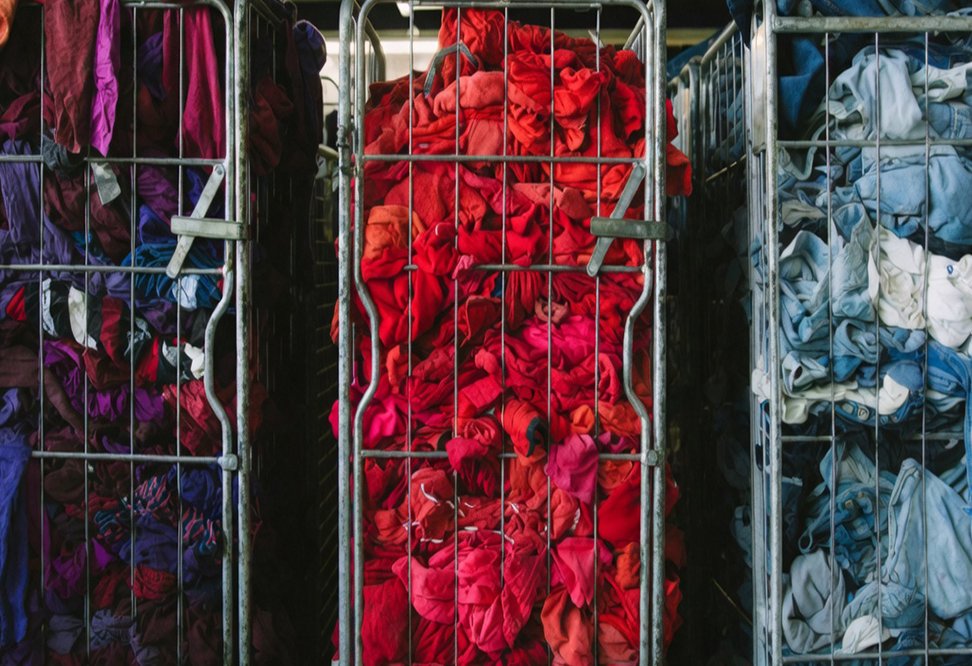
At Textiles Recycling Expo USA, industry speakers warned that textile-to-textile recycling cannot scale until collection, sorting standards and downstream markets become commercially aligned.
Post-consumer textile recycling remains constrained less by recycling technology than by feedstock logistics. That was the central message at Textiles Recycling Expo USA, held April 29–30, 2026, at the Charlotte Convention Center, where Goodwill, FABSCRAP, SuperCircle and the Ellen MacArthur Foundation discussed why used garments are still difficult to turn into new fibres at scale.
Waste volume is outrunning infrastructure
The global scale is already severe. UNEP says about 92 million tonnes of textile waste are produced each year, while garment use has shortened and fast-fashion consumption has intensified. Yet collection and sorting systems remain fragmented, underfunded and poorly matched to the technical specifications of recyclers.
Goodwill Industries of Northwest North Carolina illustrated the problem clearly: its 52-store network handles around 17 million pounds of textiles annually that do not sell through thrift channels. Across Goodwill’s wider US store footprint, that becomes a major unsold-material stream requiring markets beyond resale.
Recyclers need precision, not mixed bales
The difficulty is not simply collecting clothes. It is sorting them into commercially usable inputs. One cotton recycler may require 100% white cotton cut to a specific size; another may tolerate limited contamination but reject prints or demand a different fabric section. Without shared pre-processing standards, manual sorters must make complex decisions garment by garment, making scale expensive and automation harder.
This is why fibre-identification technology is becoming important. Matoha’s textile scanners, presented at the expo, use AI-assisted identification to detect multiple material types and blends, helping sorters distinguish cotton, synthetics and mixed compositions when labels are missing, faded or unreliable.
Brands must stay in the loop
SuperCircle’s model points to one practical route: work directly with brands on trade-ins, damaged returns, excess inventory and factory defects, creating cleaner and more predictable reverse-logistics streams. Goodwill’s partnership with the Textile Innovation Engine to convert some unsold textiles into socks shows another route: localised collaboration between collectors, processors and product developers.
The next stage will require shared cost. Collection and sorting are too expensive for charities, recyclers or brands to absorb alone. If post-consumer textile-to-textile recycling is to move beyond pilots, the industry will need common sorting standards, stronger downstream demand and financial responsibility spread across the value chain.
