

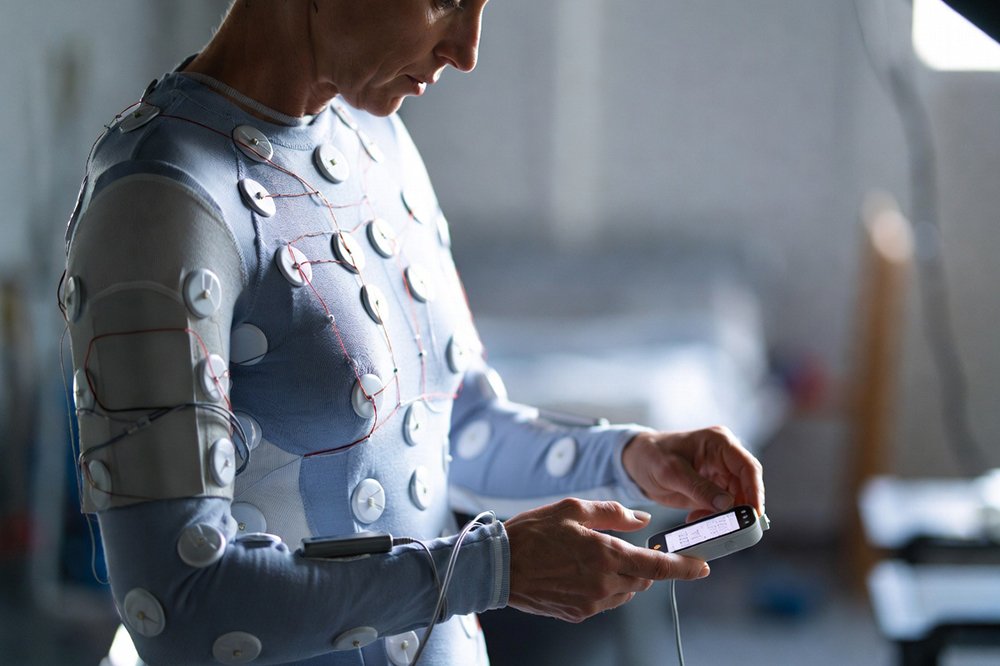
Textile-based sensors are becoming more capable of long-duration health monitoring, yet the gap between promising prototypes and routine medical use remains significant.
Smart clothing is moving beyond novelty and into more serious healthcare territory, especially in areas such as ECG monitoring, respiration tracking, temperature sensing and long-duration physiological observation. The key technical advantage over watches and wristbands is simple: garments can cover larger areas of the body and maintain more stable skin contact, which can improve signal quality for some measurements, particularly in cardiovascular and respiratory monitoring. Recent reviews of textile-based ECG systems and smart healthcare textiles show strong progress in integrating sensors directly into shirts, bras and other garments for ambulatory monitoring.
That said, some of the bolder claims in the source text need caution. Smart garments are already showing promise in detecting arrhythmia-related patterns and other physiological anomalies, but the idea that clothing is broadly and routinely detecting “glycemic crises before symptoms” is still ahead of mainstream clinical deployment. MIT-linked work has reported noninvasive glucose-monitoring advances, but those are not the same as commercially mature smart garments already delivering medical-grade glucose alerts in everyday use.
Where the real opportunity lies
The strongest near-term case for smart clothing is continuous, low-burden monitoring. Research literature increasingly points to applications in cardiovascular monitoring, chronic disease management, rehabilitation, sleep observation and elderly care, where comfort and long wear time matter as much as raw sensing performance. In that sense, smart clothing is less a replacement for watches than an expansion of the wearable-health toolkit.
The barriers remain stubborn
The biggest obstacles are exactly the ones the source text highlights: durability, wash resistance, power management, signal reliability and data privacy. A 2025 Nature Electronics paper on a smart acoustic textile notes that practical value depends on garments being washable, robust, safe and cost-effective, while current functional materials still degrade too quickly under friction and repeated washing. Reviews across the field also repeatedly flag privacy and secure data handling as central adoption challenges.
The direction is clear, but the timeline matters. Smart clothing is becoming a serious health-monitoring platform. It is not yet a frictionless, mass-market medical standard. The winners will be the companies and research groups that solve not only sensing, but also reliability, manufacturability and clinical trust.
