

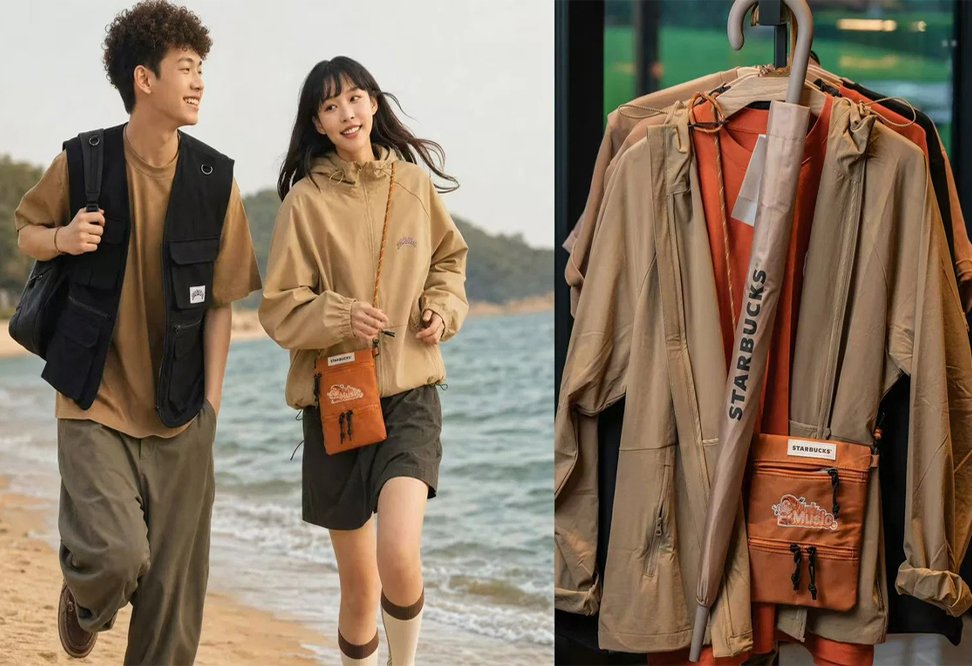
The launch shows how cafés and restaurant chains are moving beyond merchandise into lifestyle products that compete for younger consumers’ wardrobe, not only their daily drink spend.
Starbucks China has launched its first nationwide apparel line, marking a new step in the convergence of food, beverage, fashion and brand licensing. The company’s “Bearista Town” collection is being sold through more than 400 stores across China and includes utility vests, embroidered T-shirts and hoodies priced from 279 yuan to 459 yuan.
The collection is built around Starbucks’ Bearista character, a familiar brand mascot that has already moved across toys, plush products, blind boxes, household items and car accessories. Starbucks says more than 1 million Bearista Town IP products have been sold within a year.
From cups to clothing
Starbucks’ retail business has traditionally been centred on drinkware, tumblers and seasonal merchandise. Apparel was mostly limited to occasional event items. The China launch is different because it treats clothing as a structured product category rather than a promotional accessory.
For apparel suppliers, this matters because non-fashion brands are becoming new buyers of small-batch, IP-led, fast-turnaround fashion. These programmes require design agility, reliable decoration, controlled quality, licensed branding discipline and the ability to manage limited-edition drops.
China’s F&B brands widen the playbook
Starbucks is not moving alone. China’s beverage and restaurant brands are increasingly using merchandise and fashion collaborations to deepen consumer engagement. Luckin Coffee has run multiple IP collaborations, including with Disney, Zootopia and Tom and Jerry. HeyTea has used collaborations with brands and characters to generate resale demand, while KFC China, McDonald’s China and Haidilao have also moved into apparel, bags and lifestyle goods.
The business logic is clear: drinks alone face margin pressure and intense competition. Branded apparel can create scarcity, social-media visibility and emotional attachment among younger consumers.
A signal for lifestyle sourcing
The apparel line also fits Starbucks’ wider China strategy after its joint venture with Boyu Capital took effect in April 2026. Localization is now central to the company’s growth plan.
The next signal to watch is whether F&B apparel remains novelty merchandise or becomes a recurring sourcing category. If the model scales, textile manufacturers may find new customers not only in fashion brands, but in cafés, tea chains, restaurants and entertainment-led consumer IP owners.
