

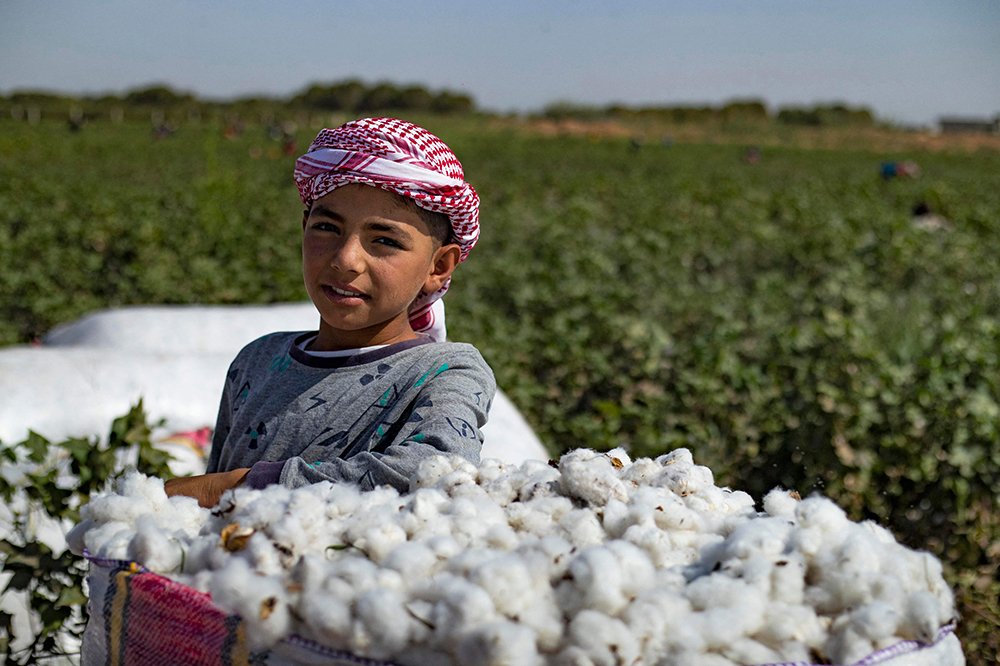
Damascus wants to restore cotton as a strategic export crop, but success will depend on water, farmer support and credible state execution.
Syria’s Ministry of Agriculture plans to expand cotton cultivation to 50,000 hectares this season, nearly doubling last year’s actual planted area and signalling an attempt to revive a crop once central to the country’s farm and textile economy. Officials say the aim is to move production back towards levels seen before the war.
What is planned
At Syria’s 41st Cotton Conference in Aleppo, Agriculture Minister Amjad Badr described cotton as both a strategic and cash crop, important not only for exports but also for spinning, oil, feed and crop rotation. The ministry says it will buy the full crop from farmers who follow its plans and technical guidance. Officials are also calling for modern irrigation, stronger local varieties and better adaptation to climate stress.
Why it matters
The ambition is large because the collapse was severe. Cotton area fell from 237,000 hectares in 2005 to 32,000 in 2020, while output dropped from about one million tonnes in 2005 to roughly 97,000 tonnes of seed cotton in 2020. War, displacement, weak state support and water scarcity all eroded the sector.
What comes next
The target is economically logical: Syria still sees cotton as a route to foreign exchange and industrial recovery. But acreage targets alone will not revive the sector. Without reliable pricing, water management, input support and functioning market access, the revival risks remaining more aspiration than turnaround.

