

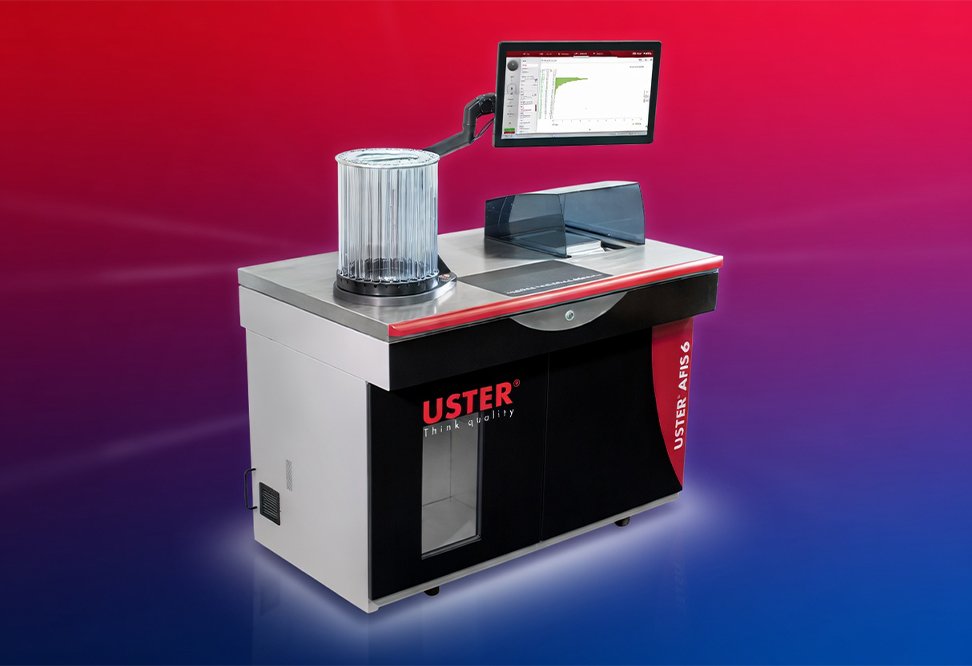
The latest AFIS platform measures fibre quality from blowroom to roving, adding synthetic-fibre and recycled-cotton analytics that can help spinning mills control waste before defects reach the yarn.
Uster Technologies’ AFIS 6 is extending laboratory fibre process control beyond conventional cotton into man-made fibres, blends and mechanically recycled cotton, giving short-staple spinning mills a broader dataset for controlling quality and raw-material losses.
The system measures material through the preparation sequence from blowroom to roving, tracking single-fibre length, short-fibre content, fineness, maturity, fibre neps, seed-coat neps, trash and dust. These parameters allow mills to assess whether opening, carding and combing are improving cleanliness without unnecessarily damaging or discarding usable fibre.
Synthetic fibres enter the same platform
A significant advance over earlier AFIS generations is the ability to test common short-staple synthetics and regenerated fibres—including polyester, viscose, modal, lyocell and acrylic—in the same instrument used for cotton.
For these materials, AFIS 6 measures characteristics including neps, cut length and fibre fineness, helping mills verify incoming material and control cotton-synthetic or 100% synthetic spinning programmes.
The system’s NLM sensor measures fibre length, maturity and nep characteristics, while an optional T Sensor quantifies trash and dust. Uster says lower contamination can reduce downstream problems including weaving stoppages, knitting-needle wear and cleaning requirements in open-end spinning.
Recycling becomes measurable
Uster has also added an optional Recycling R Module for mechanically recycled cotton. It measures the Recycling Opening Index, remaining yarn pieces per gram and short-fibre content below 6.35 mm, creating quantitative tools for comparing recycled feedstocks and opening processes.
AFIS 6 can connect with Uster Quality Expert, allowing fibre and yarn data to be analysed together, while Uster Statistics provides benchmarking against industry quality levels.
Fibre quality becomes an economic variable
For spinning mills, the value is not simply better laboratory measurement. Excessive cleaning and combing can improve appearance while simultaneously increasing good-fibre loss and cost.
The commercial test for AFIS 6 is therefore whether mills use its data to improve first-quality yarn yield, waste percentage, nep control, short-fibre management and recycled-content consistency. As fibre mixes become more complex, process control increasingly starts before the spinning frame.
