

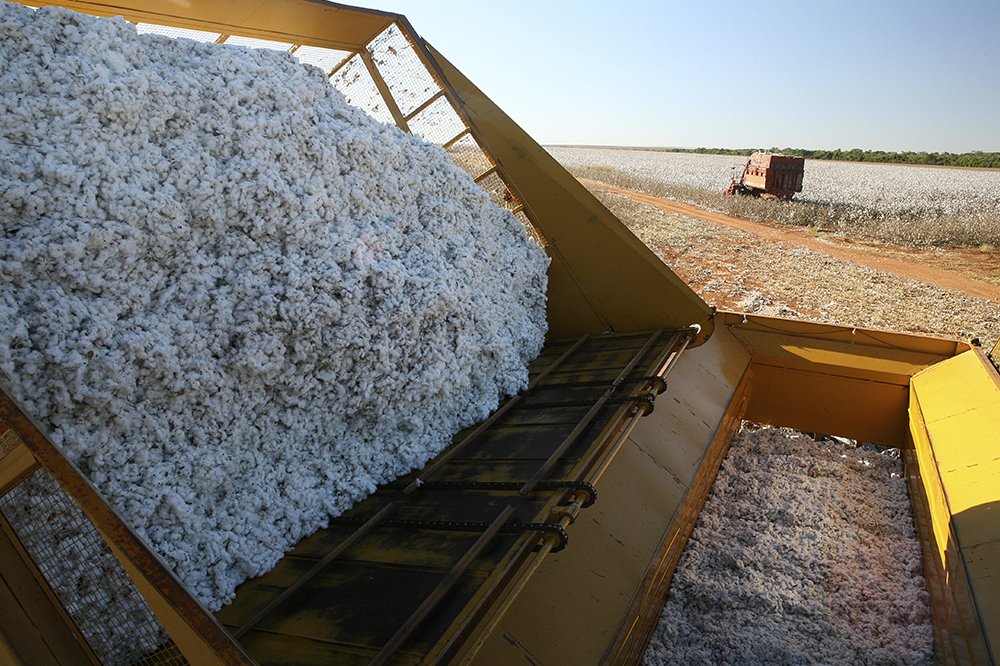
Record March shipments strengthened Brazil’s position in global cotton trade, but a smaller new crop could begin to tighten export availability later in the marketing year.
Brazilian cotton exports reached a record 347,800 tonnes in March 2026, generating $530 million in revenue and extending the country’s strong run-in world cotton trade. The monthly volume was up 45.4% from March 2025 and 28.6% from February, according to Abrapa’s April market report, as reported by Ecotextile. China remained the biggest destination, taking 103,463 tonnes, or 30% of the total. Bangladesh followed with 56,191 tonnes, equal to 16%, while India imported 41,387 tonnes, or 12%.
The broader export trend remains robust. Across the first eight months of the 2025/26 marketing year, from August through March, Brazil shipped 2.34 million tonnes, up 9.2% year on year. China, Bangladesh and Turkey together accounted for 57% of cumulative export volume, underlining how heavily Brazil’s cotton trade is tied to Asian spinning and textile demand. The March performance confirms Brazil’s growing weight in global cotton supply, especially as mills in Asia continue to diversify sourcing and look for large, reliable exporters.
But the market is also beginning to price in a weaker supply outlook. Abrapa has revised Brazil’s 2026 planted area down 5% to 2.05 million hectares and cut its production forecast by 10% to 3.83 million tonnes. Average yield is now estimated at 1,865 kilograms per hectare, down 4.7%. That combination suggests the current export momentum is being driven by the tail end of a strong prior crop rather than confidence in the next one.
For merchants, mills and competing exporters, that matters. Brazil has been one of the most important swing suppliers in recent cotton trade, particularly when Chinese buying accelerates. If the lower crop estimate holds, the market may face a tighter second half of the season, even if near-term shipments remain strong. The next signal to watch is whether weather, prices and planting economics allow Brazil to stabilise output, or whether the current export record proves to be the high point before supply contracts.
