

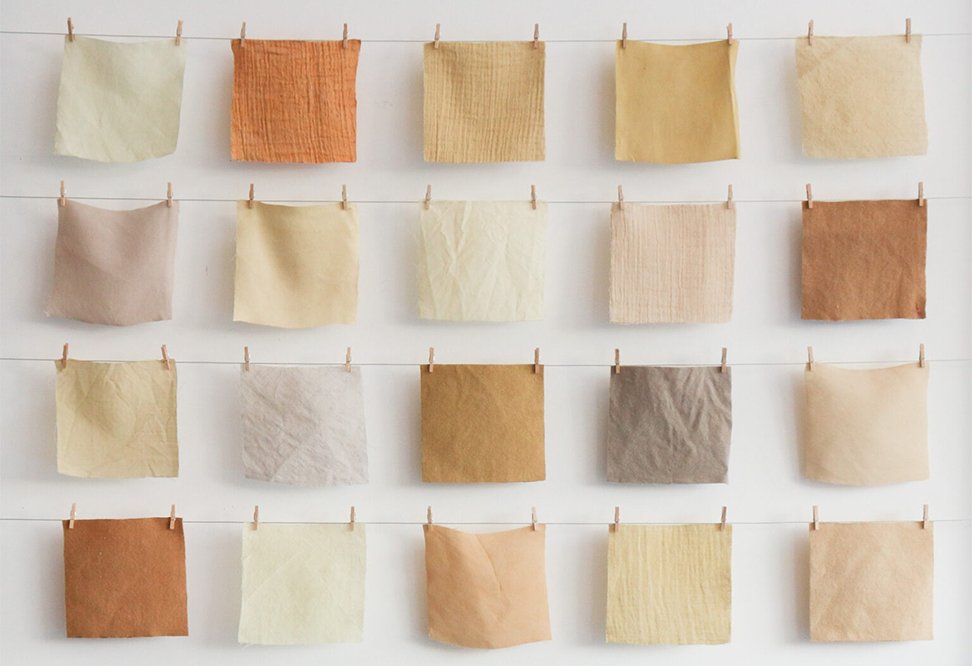
The Dutch company’s algae-based dyes are designed to fit existing dye-house systems while helping natural textiles remain biodegradable.
Dutch materials start-up Zeefier is advancing seaweed-based textile dyes as an alternative to conventional petrol-based colourants, with support from the EU’s BlueInvest programme. The European Commission says the company is using seaweed as a renewable ocean resource to reduce the textile sector’s dependence on fossil-derived dye chemistry and preserve the biodegradability of dyed fabrics.
Colour becomes a circularity issue
Synthetic dyes dominate the textile industry because they offer consistency, scale and colour performance. But many are derived from fossil-based chemistry and can persist in the environment. For natural fibers such as cotton, wool, silk and linen, colour chemistry can also undermine end-of-life claims if the dye prevents a textile from biodegrading or limits recycling options.
Zeefier’s proposition is therefore not only about replacing one colour source with another. It addresses a wider problem for brands and dye houses: how to maintain industrial dyeing performance while reducing fossil inputs and improving circularity credentials.
Designed for existing dye houses
A key part of Zeefier’s strategy is compatibility with current production systems. The company says its industrial seaweed-based dyes can integrate directly into existing dyeing equipment, without requiring major process changes or new machinery. Its current palette includes natural shades such as browns, greens, reds and greys.
That plug-and-play positioning matters commercially. Dye houses are unlikely to adopt alternative colourants if they require disruptive capital expenditure, complex retraining or major changes in batch processing. Compatibility with existing systems could make the technology more realistic for mills serving fashion, home textiles and premium natural-fiber markets.
From niche colour to industrial test
Zeefier has been in research and development for almost a decade and was formally established in 2020. The company is now working to scale its approach for dye houses internationally through BlueInvest, the EU initiative supporting investment in blue-economy ventures.
The next test will be industrial consistency: shade reproducibility, fastness performance, cost, supply reliability and compatibility across fibers and finishing conditions. If Zeefier can meet those benchmarks, seaweed-based dyes could move from sustainable-material novelty to a practical tool for textile manufacturers seeking lower-impact, fossil-free colour systems.
