

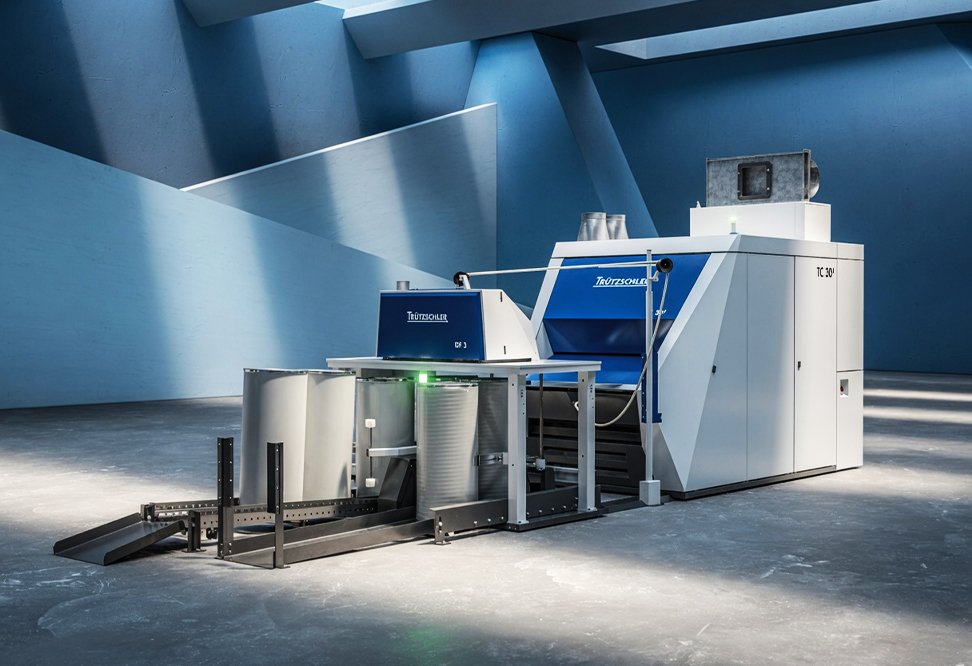
The strongest commercial signal from the IDF 3 trials is not only higher speed, but the possibility of processing short fibres and recycled blends with fewer preparation stages.
Trützschler is positioning its Integrated Draw Frame IDF 3 as a productivity and quality tool for mills processing short fibres, recycled material and cotton blends. Customer trials in Türkiye show that the system, particularly when paired with the company’s TC 30i card, can shorten spinning preparation while maintaining or improving yarn quality.
Turkish trials show the productivity gap
In one Turkish mill producing 100% cotton rotor yarn, Ne 30/1, Trützschler compared a conventional preparation route using one breaker and one finisher draw frame at 90 kg/h with a TC 30i card plus IDF 3. The new configuration increased output first to 130 kg/h and later to 150 kg/h, while delivering lower imperfection index, or IPI, values and more consistent quality.
Another Turkish customer using TC 30i cards with IDF 3 in a rotor-spinning line for cotton and cotton blends reported a 33% productivity increase against a conventional competitor set-up with breaker and finisher draw frames. The importance for mills is direct: fewer process stages can mean less space, lower handling, reduced operator load and less intermediate material tied up in cans.
Short fibres become the test case
The most commercially relevant trial involved a 50% cotton waste / 50% polyester blend processed with an IDF 3 and TC 19i card. At 130 kg/h, the IDF 3 process reduced IPI levels by about 50% compared with a conventional two-passage draw-frame route. Even when output was raised to 220 kg/h, IPI values remained below those of the conventional process.
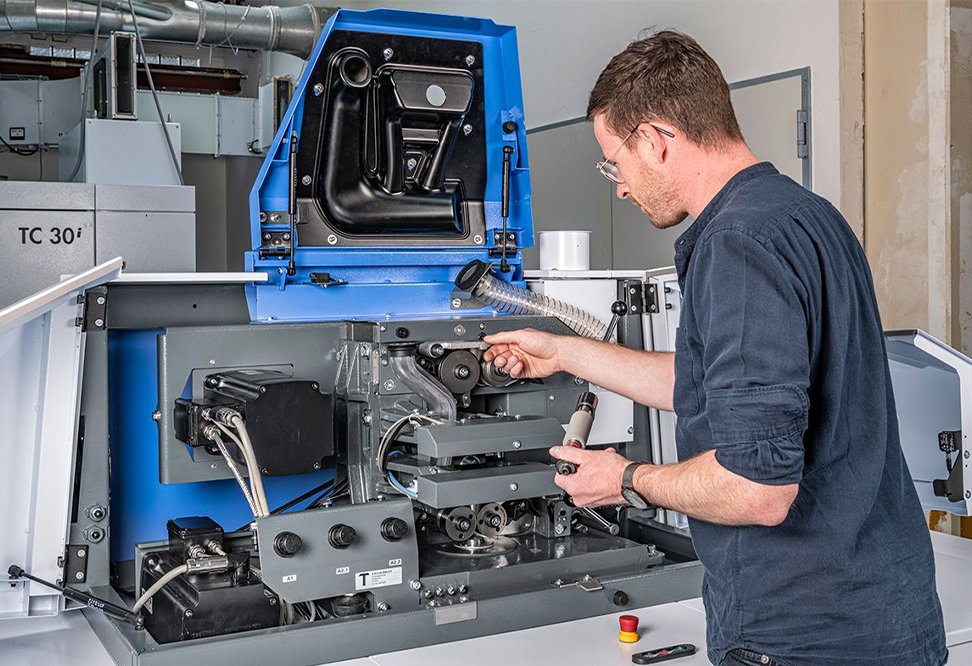
This matters because recycled fibres and cotton waste typically contain higher short-fibre content, making drafting control more difficult. Trützschler says the IDF 3 uses one drafting zone and special drafting-zone geometry to guide fibres more reliably, reduce floating fibres and produce a more homogeneous sliver.
The mill economics
For spinning mills, the IDF 3 is best read as a process-economics technology: higher carding output is valuable only if downstream preparation can absorb speed without quality loss. Trützschler’s official positioning also stresses shorter processes, lower workload, fewer errors, reduced investment and space savings.
The next question is broader adoption. Mills will watch whether these Turkish results translate across different cotton origins, recycled-fibre qualities, yarn counts, rotor systems and energy-cost environments.
