

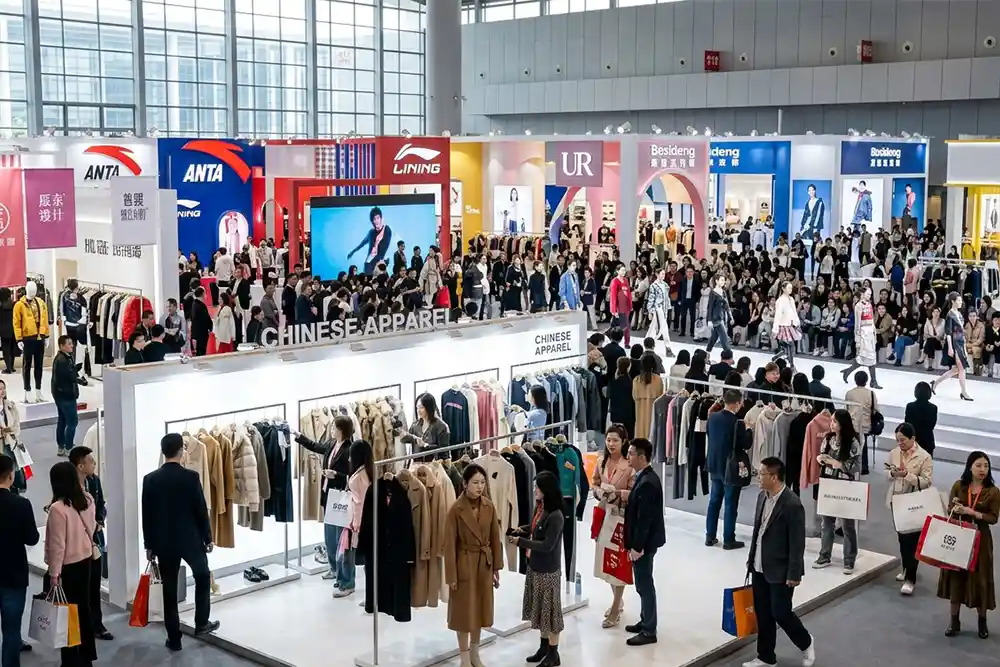
Five Chinese names now feature in Brand Finance’s Apparel 50 2026, signalling a shift from manufacturing scale toward higher-value consumer brands, technology-led product development and premium positioning.
Chinese apparel brands increased their combined brand value by 27% year on year to $15.2 billion in Brand Finance’s Apparel 50 2026 ranking, with five Chinese names represented among the world’s 50 most valuable apparel brands.
The advance comes against a weaker global backdrop. Total brand value across the Apparel 50 fell 4% to $350.9 billion in 2026, making China’s gains notable as established luxury and sportswear leaders faced pressure. France remains dominant with eight brands worth $120.7 billion, while the US has the largest number of entries at 12, valued collectively at $68.8 billion.
Five brands build China’s position
Chow Tai Fook remains China’s highest-ranked brand, rising 13% in value to $4.7 billion and ranking 19th globally. Sportswear group Anta increased 3% to $3.5 billion, placing 26th. New entrant Laopu Gold, valued at $2.7 billion, entered at 35th.
The strongest momentum came from Bosideng, whose brand value climbed 21% to $2.5 billion, making it the fastest-growing apparel brand worldwide in 2026. Its value has increased almost 170% since 2019. Brand Finance links the expansion partly to technology investment, including AI and data analytics across product development, manufacturing, supply chains and retail.
Li Ning entered the ranking at $1.7 billion and became the ninth-strongest apparel brand globally, recording a Brand Strength Index score of 84.3/100 and an AAA- rating.
China moves further downstream
The figures underline an important structural change for the textile industry. China is increasingly competing not only through fibre, fabric and garment manufacturing capacity, but through brand ownership, product technology, direct-to-consumer channels and consumer intellectual property.
That shift allows more value to be captured downstream rather than remaining concentrated in manufacturing margins. For competing textile-export economies, the benchmark is therefore moving: manufacturing competitiveness increasingly needs to be complemented by product development, performance innovation and eventually proprietary brands.
The next test will be whether Chinese companies can translate strong domestic recognition into sustained international consumer demand—particularly in sportswear, outdoor and premium functional apparel, where performance and technology are becoming increasingly important drivers of brand value.
