

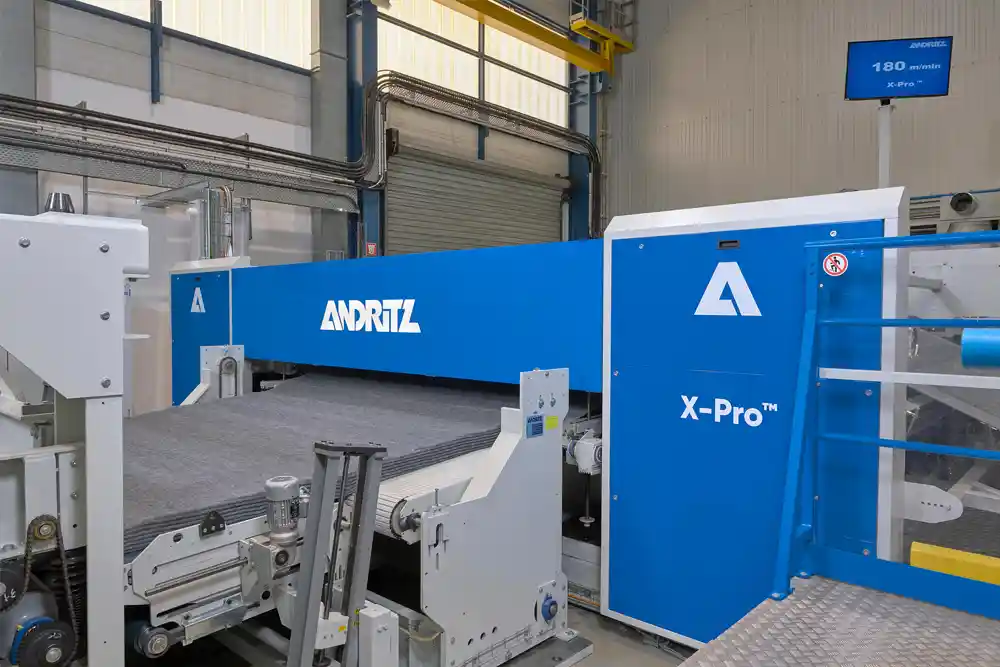
The X-Pro crosslapper’s 250 m/min input speed and a new medium-capacity needleloom anchor ANDRITZ’s push for higher productivity, better web control and retrofit flexibility.
ANDRITZ is preparing to put higher-speed web handling and more flexible needlepunching at the centre of its CINTE 2026 showcase in Shanghai, targeting producers of durable nonwovens, technical textiles and hygiene materials. The exhibition runs September 1–3 at the Shanghai New International Expo Centre, with ANDRITZ in Hall 5, booth W5-E01.
Crosslapping moves to 250 m/min
The headline development is the X-Pro™ crosslapper for needlepunch and spunlace lines. ANDRITZ specifies a maximum input speed of up to 250 m/min, depending on delivery width, with output working widths of up to 8.3 metres. The machine is designed for cards of 2.5, 3.0 and 3.5 metres.
Its X-Path web-transfer architecture is designed to keep the web controlled from card exit to delivery, limiting internal distortion and improving overlap, batt homogeneity and profile accuracy. The X-Pro is compatible with ANDRITZ’s ProWin™ profile-correction system and can be supplied for new lines or rebuild projects. That gives producers a potential route to higher throughput without replacing an entire production line.
A broader needlepunch offer
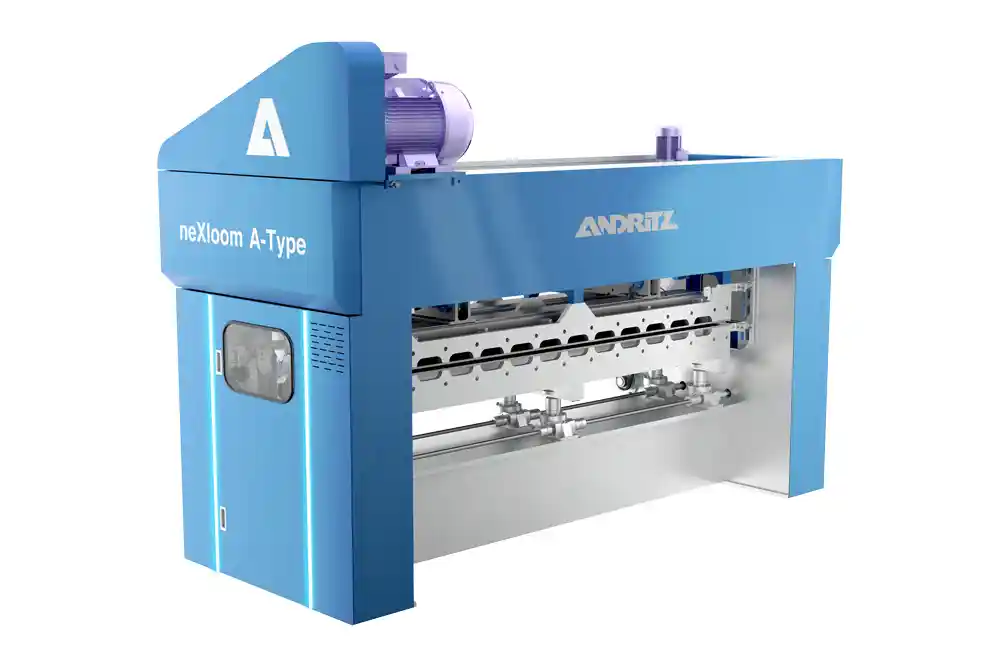
ANDRITZ will also highlight its neXloom A-Type needleloom, positioned for medium-capacity production in synthetic leather, filtration, geotextiles and automotive applications. Technical data lists working widths of 2.7–5.1 metres, punching speeds of up to 1,200 rpm and machine speeds of up to 50 m/min. Features include random needle-pattern capability and optional automatic greasing.
Beyond the two machines, ANDRITZ will present spunlace, Wetlace™, air-through bonding and airlaid technologies for wipes, hygiene and medical nonwovens, alongside needlepunch, airlay and wetlaid systems for filtration, automotive, geotextiles and coating substrates.
The machinery angle
The CINTE presentation points to a broader machinery priority: combining productivity, product uniformity, retrofitability and lifecycle support rather than treating them as separate investment decisions. For Asian nonwovens producers, the key test will be whether higher web-handling speeds deliver stable quality and lower unit costs across demanding technical applications.
