

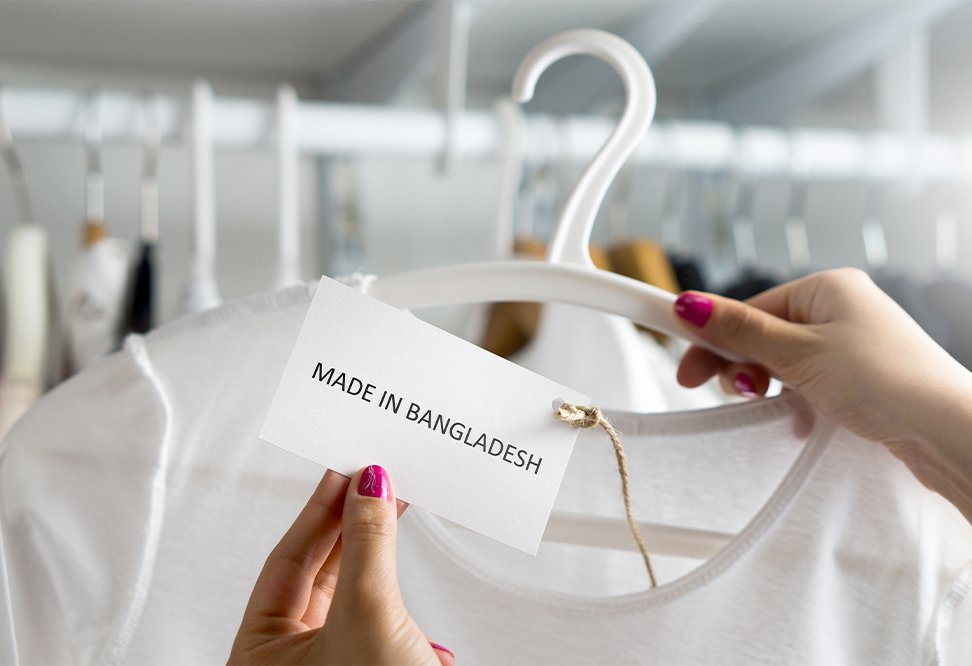
Growth in three major Western markets gives Bangladesh’s apparel sector useful resilience, but weaker overall RMG earnings show that market strength is still selective.
Bangladesh’s ready-made garment exports posted growth in the United States, United Kingdom and Canada in FY2025-26, even as the sector’s overall earnings slipped year on year. According to Export Promotion Bureau data cited by BSS, RMG exports reached $38.70 billion during the fiscal year, with the three Western markets together accounting for more than 35% of apparel shipments.
Western markets hold up
The United States remained Bangladesh’s strongest major apparel market, with exports rising 2.63% to $7.74 billion. Its share of total RMG exports increased to 20.01%, up from 19.18% a year earlier. Shipments to the UK rose 0.91% to $4.39 billion, while exports to Canada increased 3.20% to $1.34 billion.
The numbers suggest that Bangladesh continues to retain buyer confidence in core Western destinations despite soft consumer demand, geopolitical uncertainty and persistent cost pressure across global supply chains. For large factories with established compliance systems, the US and UK remain critical order anchors.
Europe still dominates
The European Union remained Bangladesh’s largest apparel destination, taking $19.06 billion of RMG exports, or 49.25% of the sector’s total. Non-traditional markets, including Japan, Australia, Russia, Turkey and Gulf countries, reached $6.16 billion, equal to 15.93% of apparel exports.
This market mix shows both strength and vulnerability. Bangladesh has deep relationships in Europe and North America, but its export base remains heavily dependent on a limited group of large destinations. That makes market-access rules, tariff changes, currency movements and buyer inventory cycles unusually important.
Growth is not broad-based enough
The headline gains should be read alongside the broader export picture. Bangladesh’s total exports stood at $48 billion in FY2025-26, down 0.58% year on year, while apparel earnings fell 1.64% despite a strong June performance.
For manufacturers, the practical message is clear: Bangladesh is defending its position, not yet accelerating. The next phase of growth will depend on faster product diversification, stronger man-made-fibre capacity, shorter lead times, energy reliability and sharper marketing in non-traditional markets. Western-market resilience is useful; converting it into renewed overall growth is the harder task.
