

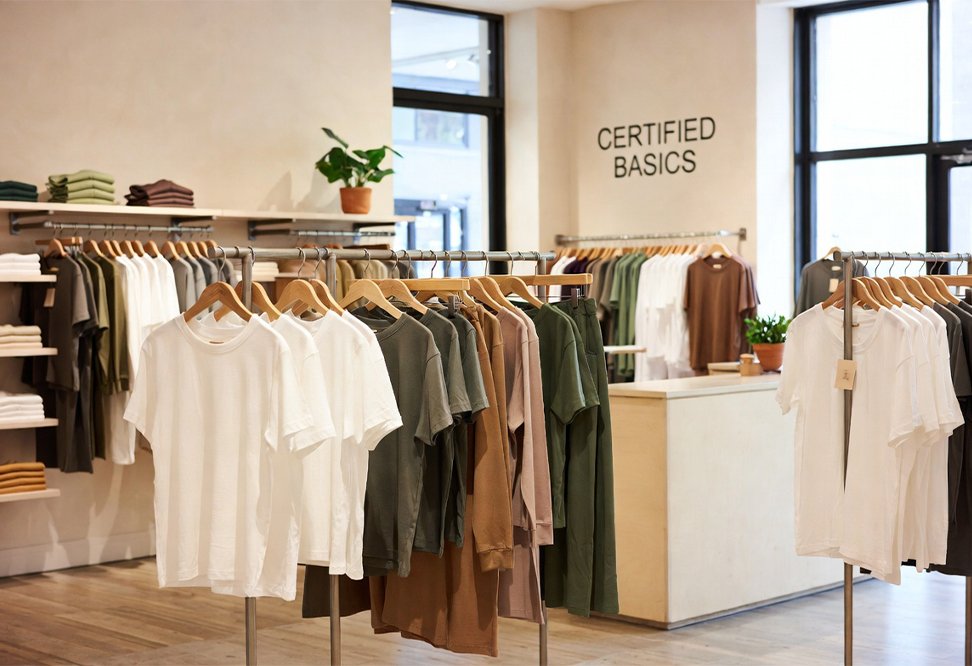
Growth is shifting from niche eco-fashion to proof-backed everyday clothing, especially T-shirts, denim and mid-price retail lines.
The global sustainable apparel market is forecast to grow from $126.0 billion in 2026 to $205.8 billion by 2036, expanding at a 5.0% CAGR, according to Fact.MR. The market crossed $120.0 billion in 2025, reflecting a clear shift in how brands and retailers position sustainability: less as a premium story, more as a product-level requirement for verified fibers, durable design and credible claims.
Basics carry the volume
Apparel basics are expected to account for 42.0% of the market in 2026, led by high-frequency categories such as T-shirts and denim. This is commercially important because basics offer repeat purchases, easier sizing, simpler merchandising and lower consumer resistance than high-ticket outerwear.
For manufacturers, this means sustainable apparel demand is no longer confined to capsule collections. It is moving into regular production planning, where cost, quality consistency, lead time and certification documents matter as much as design.
Cotton, retail and mid-price lead
Organic cotton is projected to hold 38.0% share by fiber composition in 2026, supported by strong consumer recognition and clearer certification communication at retail. Recycled polyester is gaining ground in sportswear and outerwear, but organic cotton remains the most familiar sustainability claim for everyday apparel.
Retail stores are forecast to hold 54.0% share, showing that physical retail remains important when shoppers want to assess fit, hand feel and price premium. Mid-price apparel is expected to capture 51.0% share, suggesting that sustainable apparel growth depends less on luxury buyers and more on making certified clothing affordable enough for mainstream consumers.
Regulation tightens the claim environment
Policy pressure is strengthening the market. European textile-waste rules, repair expectations, take-back systems and anti-fast-fashion debates are pushing brands toward longer-lasting, better-documented products. Organic-certified apparel is expected to cover 44.0% of the market by certification type in 2026.
The next competitive test will be proof. Brands and suppliers that can provide verified fiber origin, certification records, traceability, care guidance and durability evidence will be better placed than those relying on vague sustainability language.
