

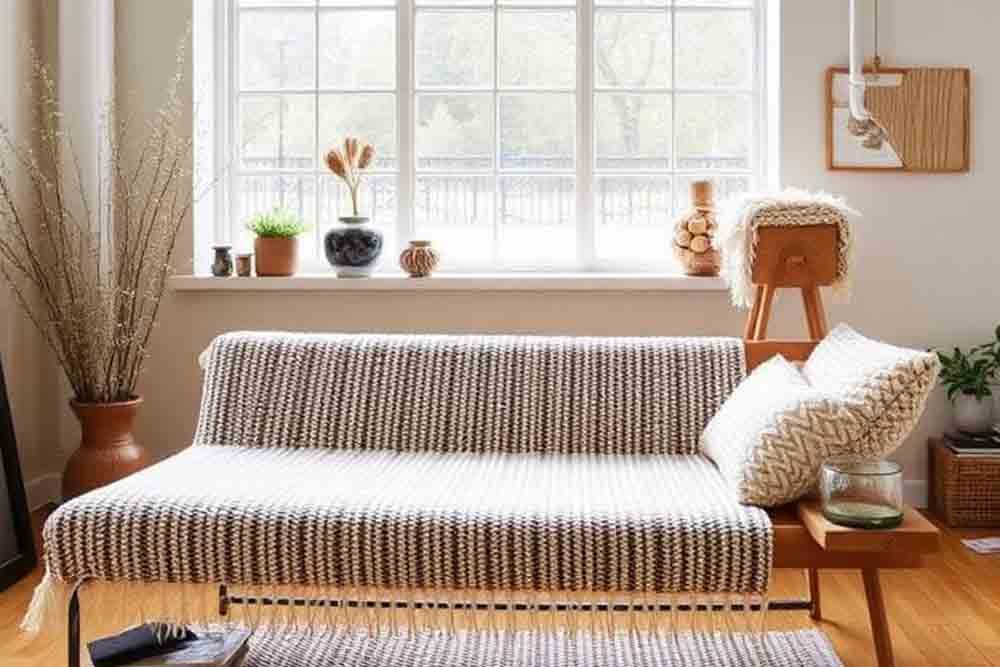
Knitted fabrics are increasingly becoming the workhorse structures of the home textiles sector. Their strength lies in a rare combination of design freedom, performance engineering, and production efficiency, enabling manufacturers to refresh products while protecting margins continuously.
Cooling blankets: performance meets affordability
A standout innovation is the development of silk-like, cooling blankets designed for use in hot climates and during the summer.
Key technical highlights:
- Q-max ≈ 0.24 W/cm², well above the 0.2 threshold for a clearly perceptible cooling sensation
- Dense, smooth warp-knitted surface using polyamide + elastane
- Breathable, fast-drying, wrinkle-resistant and easy-care
- Stretch from elastane improves drape and tactile comfort
Crucially, these blankets deliver premium sensory performance at mid-range price points, enabled by high-speed warp knitting on machines such as the HKS 2-SE. This makes them commercially attractive for mass-market bedding without sacrificing differentiation.
Corduroy reinvented: texture as a growth lever
Warp knitting is also redefining corduroy and velour aesthetics for home interiors.
What makes this compelling:
- Ribbed and plush effects are created via controlled underlaps, then cut and brushed
- Designers can vary rib width, depth, and geometry without changing basic machine platforms
- New looks include:
- Classic striped corduroy
- Faux-fur / velvet-like blankets
- “Turtle velvet” patterns with offset square segments
These structures are now extending beyond fashion into cushions, blankets, upholstery and furniture covers, tapping into the ongoing demand for tactile, cosy interiors.
Curtains at industrial speed
Warp knitting is also challenging in window decoration.
A new striped curtain concept demonstrates:
- Variable stripe width and density via stitch density and weft repeat
- Use of effect yarns for added visual depth
- ~20% productivity increase after machine upgrades, significantly lowering:
- Machine count
- Labour requirements
- Unit cost per square metre
For weavers, this represents a real technology substitution moment, especially in price-sensitive curtain markets.
Strategic implications for manufacturers
Across bedding, upholstery, corduroy and curtains, warp knitting offers a powerful combination of:
- Speed to market (rapid pattern and design changes)
- Cost efficiency (high machine productivity)
- Performance engineering (cooling, stretch, plushness)
- Design differentiation without complexity
This is why warp knitting is no longer niche in home textiles—it is becoming a platform technology for scalable innovation.
Bottom line
Warp-knitted fabrics are enabling home textile producers to engineer comfort, aesthetics and price simultaneously. Cooling blankets, modern corduroy textures and fast-produced decorative curtains illustrate how knitting technology is reshaping competitive dynamics across multiple product categories.
For manufacturers facing margin pressure, rising labour costs and fast-changing consumer tastes, warp knitting represents not just a design option—but a strategic production advantage.

