

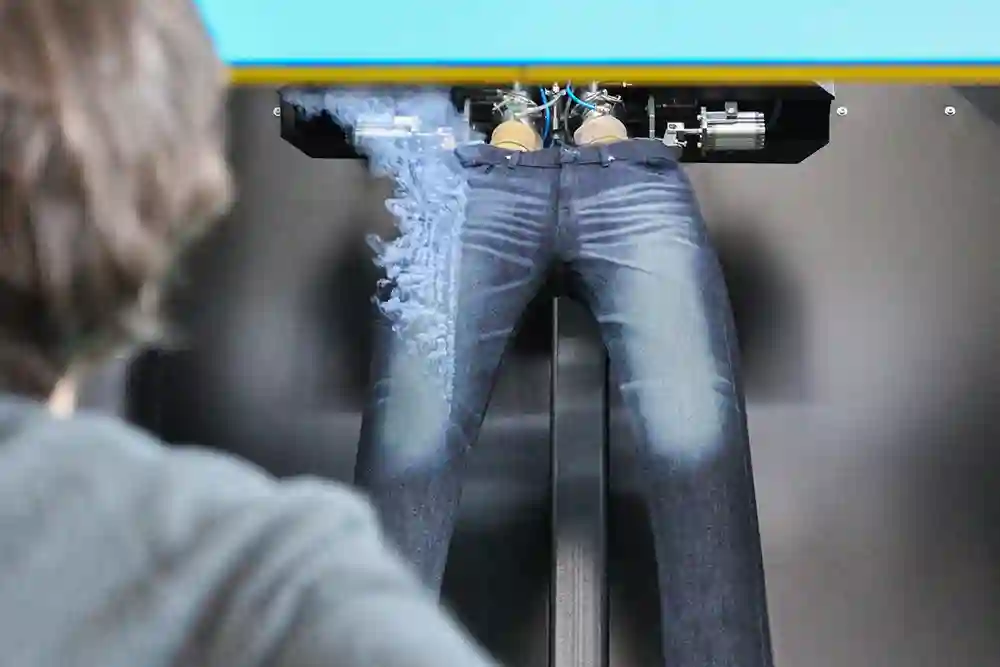
Denim finishing is shifting from water-intensive craft to digitally controlled precision, as brands seek speed, consistency and lower environmental impact.
A new wave of technologies—combining artificial intelligence, laser systems and waterless processes—is transforming how denim is finished, marking a decisive break from traditional, resource-heavy methods.
What is changing: from manual finishing to digital control
Conventional denim finishing relies on labour-intensive techniques such as sanding, stone washing and chemical treatments, often consuming large volumes of water and energy. Denim Tech 2.0 replaces much of this with laser engraving, ozone treatments and AI-driven design systems.
These tools allow manufacturers to create complex fades, whiskers and distressed effects with high precision and repeatability—reducing reliance on manual processes and improving production consistency.
Why it matters: sustainability meets speed
Waterless and low-chemical processes directly address one of denim’s biggest environmental criticisms. At the same time, digital systems enable faster sampling and shorter development cycles, aligning with brands’ demand for quicker turnaround and reduced waste.
AI-driven design platforms also allow rapid prototyping of wash effects, reducing trial-and-error in physical sampling.
What comes next: finishing becomes a digital capability
As adoption grows, finishing is evolving from a downstream process into a strategic capability. Mills that invest in digital finishing technologies can offer greater flexibility, lower environmental impact and faster response times.
In effect, denim is becoming less about washing fabric—and more about programming it.

